

8+ years growing brands on KPIs, now with AI
Grow automotive accessories on real ROAS
Built for founders done guessing at blended returns, with attribution you can finally trust.
Google Ads Partner · Meta Partner · TikTok Ads · 8+ years in performance marketing · clients tracked to blended ROAS, not impressions



Get your free Growth Gap Analysis
Senior strategist review · response within one business day
Prefer to reach out directly?
The Challenge
Why automotive accessories marketing trips up most agencies
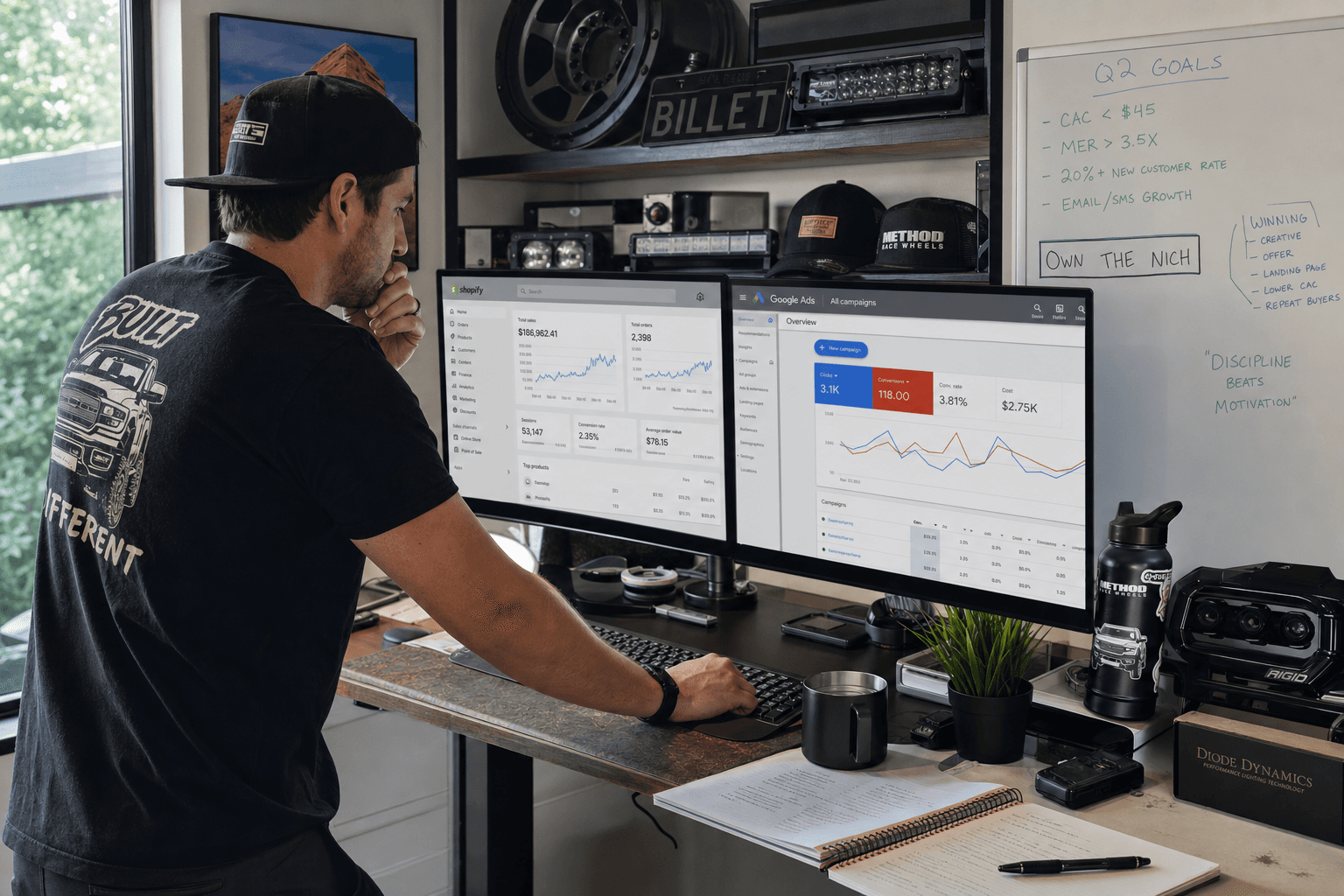
Your marketing lags what you've built: SKUs, a community, maybe a make-and-model niche. Blended ROAS sits near the 2.6x category average, and you can't tell whether creative, channel mix, or tracking caps it. Most generalist agencies don't know ACES, PIES, or your DIY vs. DIFM split, and run Google Shopping like it's skincare.
Fitment anxiety, not a weak product, holds conversion to roughly 1.1%: shoppers not 100% certain floor mats fit their truck don't buy. Sites with a Year-Make-Model (YMM) lookup convert 2.5–3x better than those without.
Paid search peaks in March, when tax refunds meet spring build season, and bottoms in October, so flat budgets overspend then and underspend in March. AC parts spike in July; suspension and wheel fitment searches climb before the first hard freeze.
Amazon sets your price floor, takes bottom-funnel buyers, and surfaces gray-market resellers undercutting MAP; third-party marketplaces took roughly $21.8 billion of U.S. aftermarket ecommerce in 2024. Ignoring Amazon costs discovery; over-relying on it costs DTC margin and the owned relationship behind LTV.
The Opportunity
Well-marketed DTC brands take an outsized share of a $350 billion aftermarket
Forty percent of U.S. automotive aftermarket revenue, roughly $140 billion, is now digital. DTC operators who own customer data and brand story and build repeat purchase win it; AutoZone and Advance Auto don't.
Meta rewards automotive brands: a $6.96 CPM (lowest of any industry), a 2.54x average Meta ROAS, among ecommerce's highest, and targeting (vehicle owned, modification interest, SEMA community membership) sharper than most realize. Competitors mostly run broad creative.
Tax-refund season is underused: the average federal refund, over $3,000 per filer in 2025, lands in late February and March. Ramp budget into that window with 'finally pull the trigger on that build' creative for buyers who've wishlisted parts for months.
Email and SMS triggered by vehicle, purchase history, and build stage (telling suspension-kit buyers what Rough Country owners add next) turn owned customer relationships into high-margin revenue batch-and-blast misses.
What Most Get Wrong
What most automotive accessories brands (and their agencies) get wrong
Organizing Google Shopping by product instead of Year-Make-Model
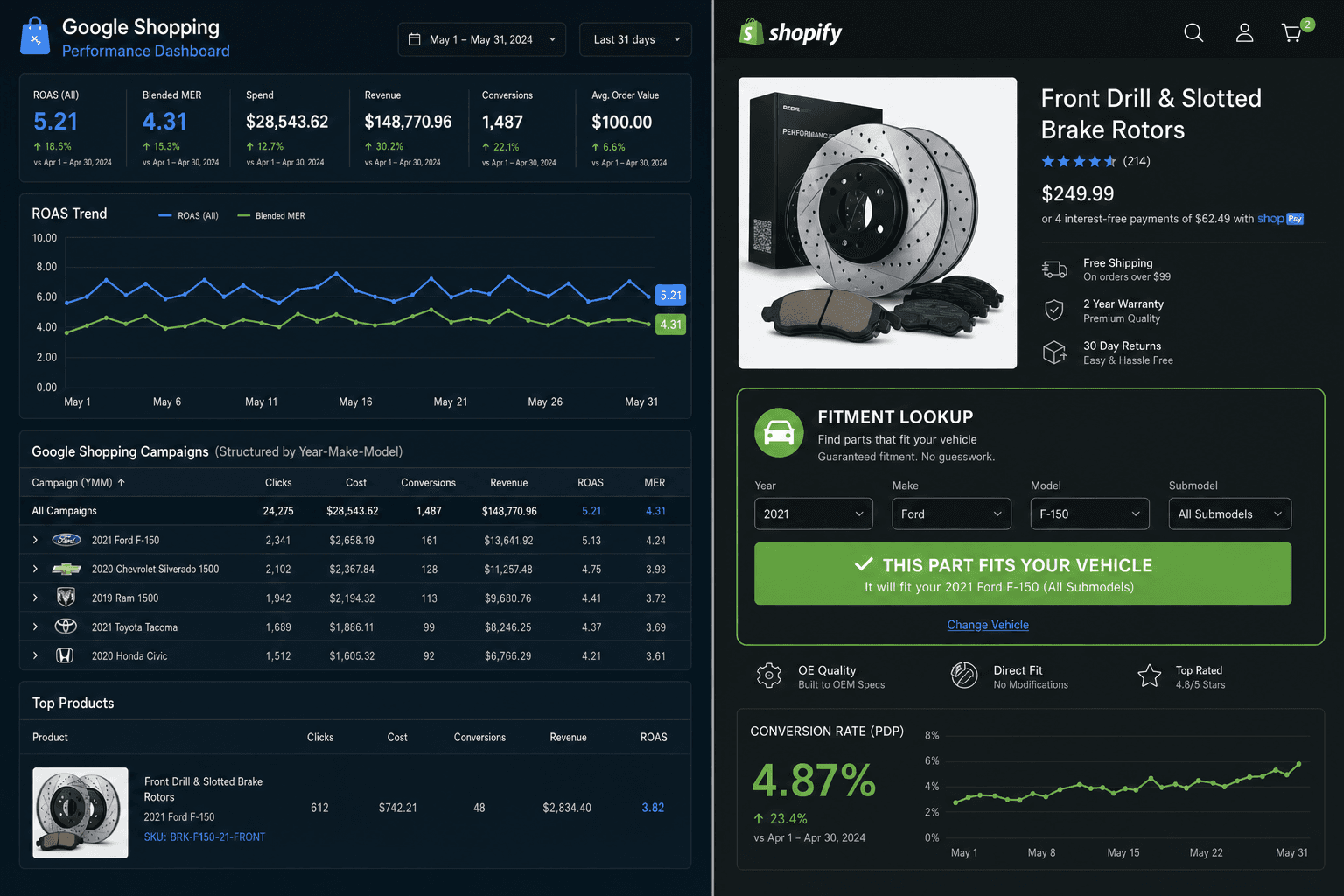
Buyers search 'floor mats 2021 F-150 SuperCrew,' not 'premium floor mats.' Product-based campaigns miss them and pay for clicks that bounce when fit is unclear; winners build feeds around YMM.
Flat budgets that ignore the March peak and October trough
This pattern has held for four consecutive years. Spend evenly and you overpay in October and underfund March, your best window. Pacing to demand is table stakes most brands skip.
Ignoring fitment friction on landing and product detail pages
Automotive converts well below the cross-category median, primarily from fitment anxiety, so paid traffic sent to pages that don't instantly resolve fit burns budget.
Treating Meta as retargeting-only and ceding prospecting to Google
Automotive's 2.54x average Meta ROAS ranks among ecommerce verticals' best, and Meta suits enthusiast targeting like 'owns a 2019 Tacoma and watches overlanding content.' Retargeting-only brands forgo those new customers.
Ceding Amazon pricing to resellers while neglecting DTC
Resellers undercut MAP when a SKU takes off. Neglect Amazon and the DTC relationship, and margin erodes on both sides while your customers' vehicle and purchase data sits unused.
Why Now
Most automotive accessories brands still run 2020-era campaigns
Most brands in the category run a three-year-old Google Shopping structure, Meta creative tested once or twice a month and rarely rotated, and broken or missing attribution. That average program earns the 2.6x blended ROAS benchmark; brands holding 4x+ run a different one.
AI now lets you test five creative angles per week instead of one or two a month, pace budget to real-time search volume ahead of the March peak, and catch a misfiring pixel before it inflates ROAS. You find what converts enthusiasts ('fits your 2021 Tacoma, ships today, zero fitment risk') within weeks.
Demand hit a record in 2024, when the SEMA specialty equipment market reached $52.65 billion in consumer sales. Brands building disciplined, AI-assisted infrastructure now will own the next March peak before competitors react.
The Mechanism
Where AI gives automotive accessories brands a real edge
Real productivity, not AI theater. Here's where it actually moves a number for automotive accessories brands.
Creative
What AI does: Generate and test angles weekly in static, video, and carousel: fitment confidence ('verified fit for your 2021 F-150'), build-stage hooks ('you finished the lift, now do the interior'), tax-refund urgency, enthusiast identity.
The result: You find the converting creative within weeks and rotate losers out automatically before they drain budget.
Why it matters here: For fitment-anxious buyers, 'this fits your exact vehicle, here's proof' beats generic product photography by a wide margin.
Digital Ads
What AI does: Structure Google Shopping around YMM queries, let AI shift bids toward the fitments and query types that convert, and pace budget to the demand calendar.
The result: More budget reaches high-intent fitment queries at peak demand, and less goes to broad clicks from shoppers who can't confirm fit.
Why it matters here: Paid search is the primary acquisition channel for automotive parts ecommerce, and real-time AI bidding keeps you ahead of competitors' static, set-and-forget Shopping campaigns.
Analytics
What AI does: Fix attribution before scaling: AI pixel validation catches misfiring tags, cross-device gaps, and inflated ROAS across Google, Meta, email, and Amazon.
The result: You move budget on numbers you trust, toward what drives profitable new-customer CAC.
Why it matters here: Automotive brands on Triple Whale or Northbeam often find reported ROAS differs materially from blended ROAS after attribution cleanup; scaling on bad data burns budget.
What AI does: Trigger email and SMS from YMM data: a suspension-kit buyer with a 2022 Jeep Gladiator hears about compatible skid plates, rock sliders, and recovery gear. Add build-stage and seasonal triggers (pre-winter, pre-March).
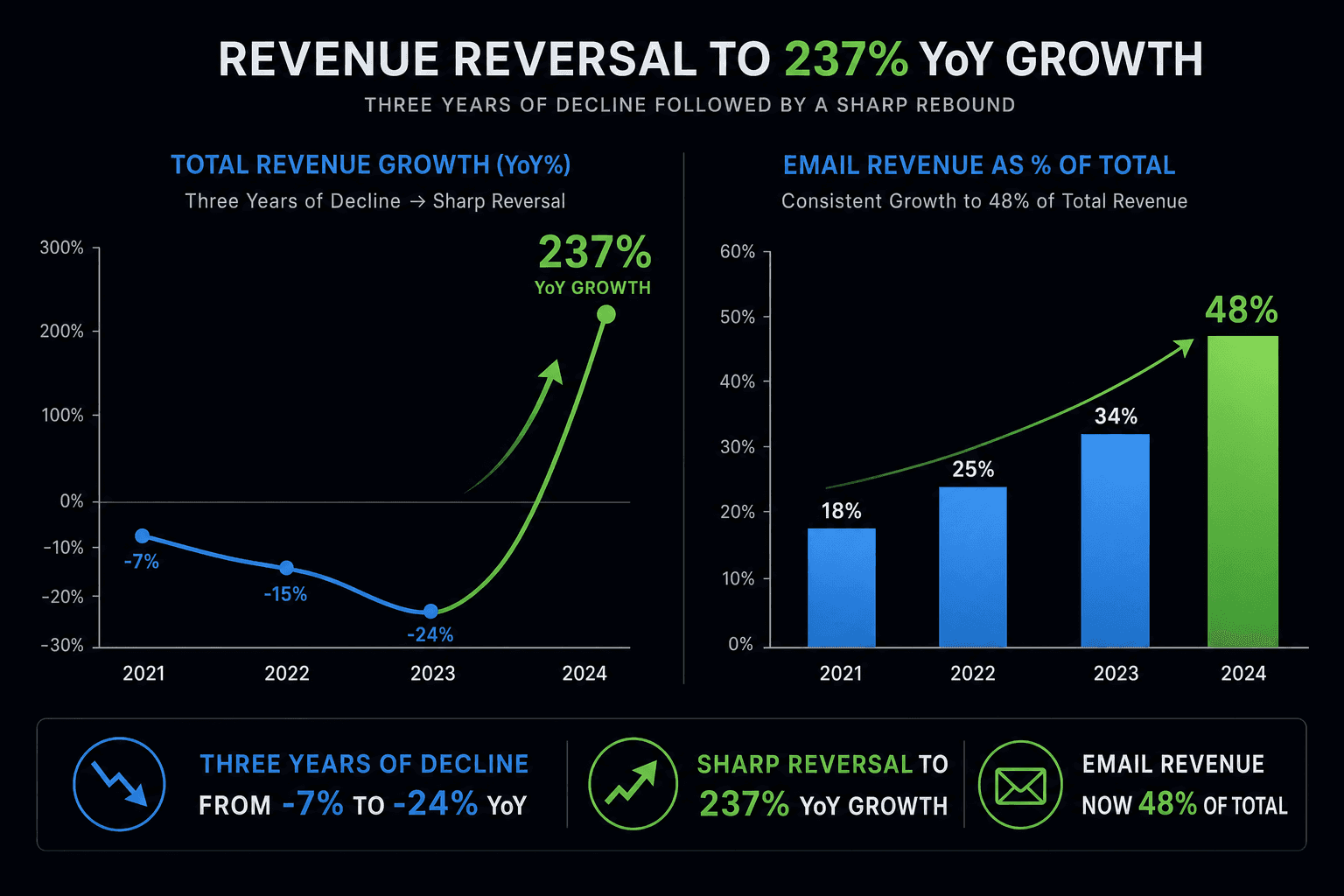
The result: Email and SMS reach a meaningful share of revenue, signaling growth beyond paid acquisition; repeat purchase rises among customers who feel you know their build.
Why it matters here: Owned customer data (vehicle, email, purchase history) is DTC's structural advantage over Amazon, and vehicle-aware flows turn it into LTV across the build journey.
Conversion Optimization
What AI does: Use AI to find where fitment anxiety causes drop-off across the fitment lookup, product page, and checkout, then test YMM lookup placement, fitment guarantee copy, and vehicle-specific social proof.
The result: Conversion rate moves toward the 2.5–3x uplift that YMM-search sites see, so the same paid traffic earns more revenue.
Why it matters here: At roughly 1.1% category conversion, each percentage point gained compounds across every paid channel, and site fixes often beat extra ad spend.
Ready to see what this looks like for your automotive accessories brands business?
No obligation. A senior strategist will show you exactly where the wins are.
The Strategy
How an automotive accessories brand should run its marketing
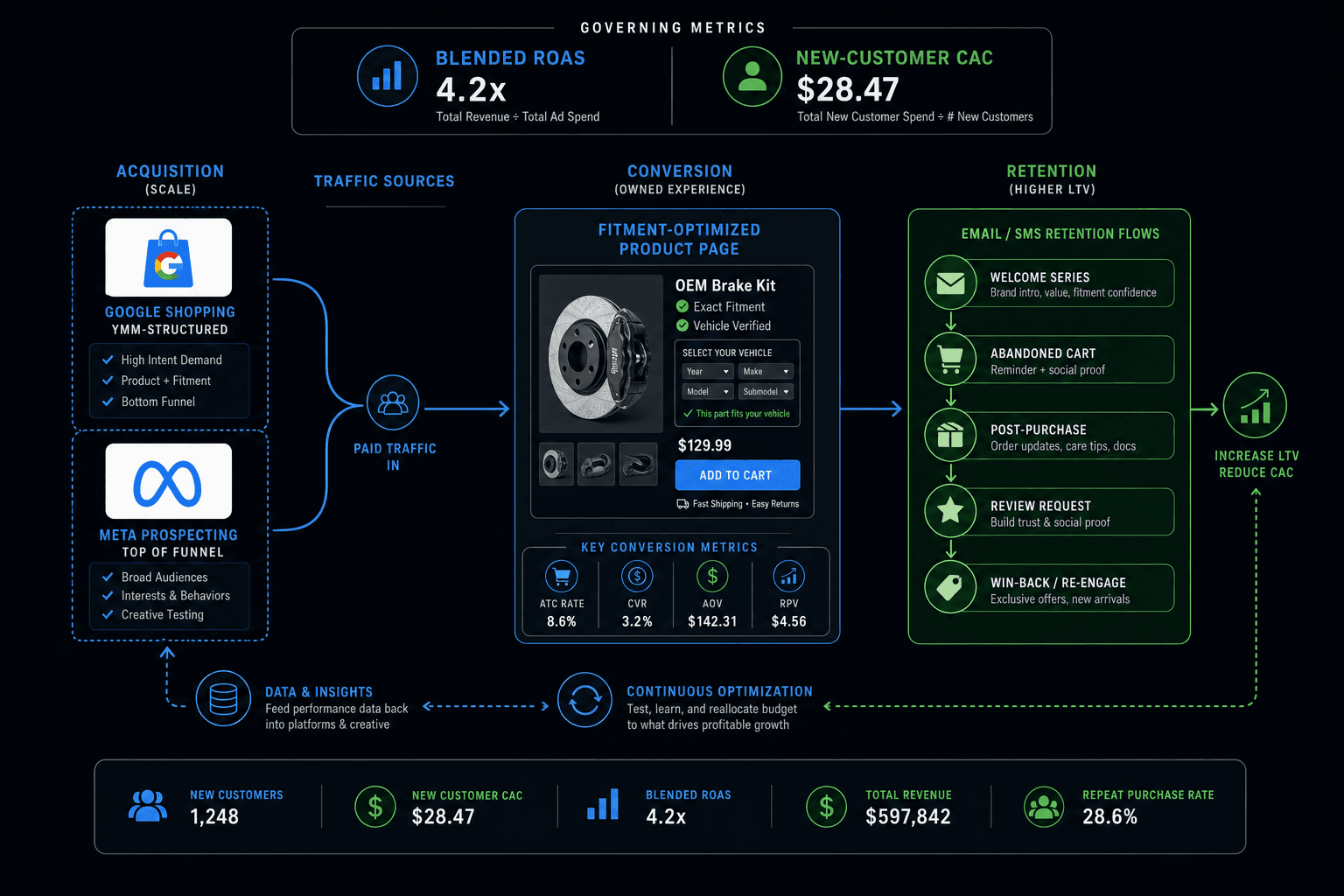
Every dollar answers to monthly blended ROAS, new-customer CAC, and progress toward the 3.0x+ threshold where scaling turns profitable. Channel mix, creative rotation, and budget pacing serve those numbers.
Google Shopping and Search come first, built on YMM queries with bids set by fitment and intent. Meta comes second: its $6.96 CPM makes it a cost-efficient channel for enthusiast prospecting when creative is right, and it retargets shoppers who left without resolving fitment.
Email and SMS come third, driving retention and LTV expansion from vehicle and purchase data.
Budget follows the demand calendar: heaviest in March, the year's highest-intent window, and lightest in October, which gets the most creative testing. AC parts in summer, suspension and tires pre-winter, and gifting SKUs in Q4 get their own budget logic.
Fix attribution before anything scales. A clean blended ROAS dashboard, including any Amazon contribution, is the operating instrument; with broken tracking, every scaling decision rests on fiction.
Treat the on-site fitment experience as a channel: a working YMM lookup, fitment guarantee copy, and vehicle-specific social proof on the product page are conversion levers that compound across every paid channel.
The one number that governs this
The governing KPI is blended ROAS ≥ 3.0x with a profitable new-customer CAC, tracked across Google, Meta, and email, not per campaign.
How We Help
What we'd do for your automotive accessories brand
We audit your pixel, GA4, and blended ROAS math, then build, in order, YMM search, Meta creative, fitment fixes, and email. A limited-client model keeps senior people on your account.
Analytics & Attribution Audit
Fix the blended ROAS dashboard before scaling, so inflated numbers don't lead you to scale losing campaigns.
Google Shopping & Search (YMM-Structured)
Rebuild campaigns around YMM queries and fitment intent, with bidding and budget pacing tied to the demand calendar.
Meta Paid Social (Prospecting + Retargeting)
Prospect enthusiasts through vehicle and modification-interest targeting, and retarget shoppers who left without resolving fitment.
AI-Assisted Creative Testing
Generate and test multiple creative angles weekly to find your converting message before a competitor testing one or two ads a month does.
Conversion Rate Optimization (Fitment-Focused)
Audit and improve the fitment experience, from YMM lookup through checkout, to close the category's conversion gap.
Email & SMS Automation (Vehicle-Aware)
Segment purchase-triggered flows by YMM and build stage to lift repeat purchase and LTV.
AI Systems & Performance Reporting
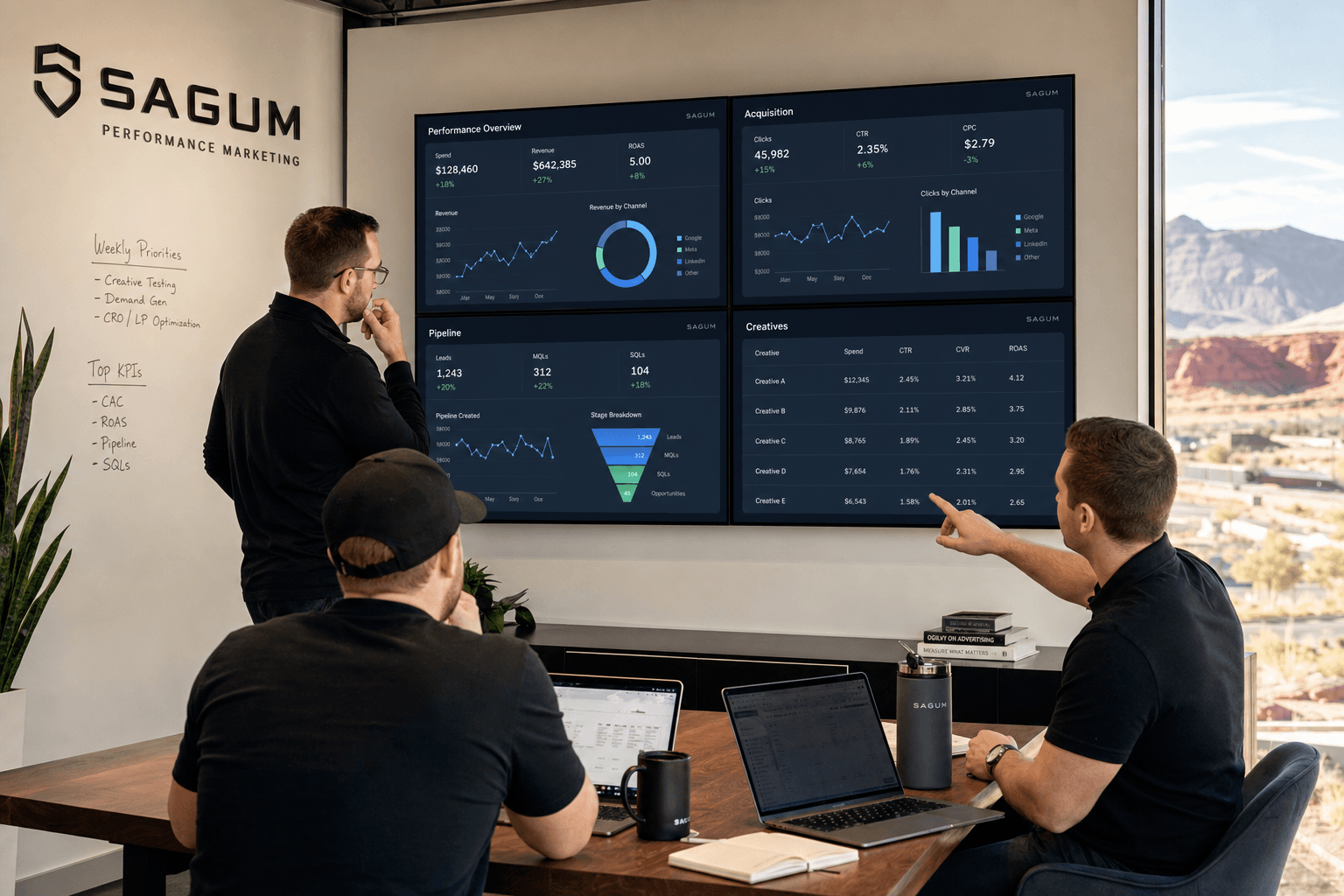
Continuously monitor performance, creative rotation, and budget pacing with AI, so we adjust strategy to real-time demand signals without waiting for a monthly review.
Who's Behind This
Who we are, and what makes us different
Sagum is a performance marketing agency founded in January 2017 in St. George, Utah. We've spent 8+ years growing real brands and being judged on KPIs, not vanity metrics.
We deliberately limit how many clients we take so each one gets senior attention. We treat your numbers like our own, we never run generic playbooks, and your strategy is built for your business, because shouldn't your brand's marketing be custom to your brand?
Sagum.ai is our AI arm: the same proven operators now build AI into the work wherever it creates real edge, not as theater, but as leverage applied with discipline.
- 8+ years growing brands on performance KPIs, not vanity metrics
- Limited client roster, with senior attention on every account
- An extension of your team; your success is tied to ours
- Custom strategy per brand, never a generic playbook
- AI built in where it moves a number; judgment over hype
“Sagum is a performance marketing agency that's spent 8+ years growing brands by treating their numbers like our own. We take on few clients, never run generic playbooks, and now build AI into the work wherever it creates real edge, not hype. Your strategy is built for your business, and our success is tied to yours.”
“Sagum roughly doubled our bottom line. They treat the work like it's their own business.”
Rachel Nilsson
CEO, RAGS
Proof
187% YoY sales growth with a seamless WooCommerce-to-Shopify migration
Phoenix Systems
Challenge
Phoenix Systems, an automotive brand, needed to grow D2C across Shopify and Amazon and to migrate and redesign its site from WooCommerce to Shopify without losing performance.
What we did
We migrated and redesigned the site on Shopify, then grew the D2C channels across Shopify and Amazon.
Result
Sales grew 187% YoY in 2024, the migration lost no SEO, and conversion doubled on increased traffic. Accessories brands scaling D2C can apply the same discipline. See sagum.com/case-studies/.
- Sales growth
- +187% YoY (2024)
- Conversion rate
- Doubled
- SEO on migration
- No loss
Let's build the marketing infrastructure your automotive accessories brand needs
No obligation, no generic audit template: we review your channel mix, blended ROAS, and fitment and conversion gaps beforehand, then say exactly what we'd change. Fit or not, you leave seeing your marketing more clearly.
Sagum · January 2017 · St. George, Utah · 8+ years