

8+ years growing brands on KPIs, now with AI
A Q4 your candle brand can finally plan for
Performance marketing that respects your margins, your seasonality, and how people actually buy scent online.
8+ years growing DTC brands · Google, Meta & TikTok partner · Performance-judged, not retainer-coasted



Get your free Growth Gap Analysis
Senior strategist review · response within one business day
Prefer to reach out directly?
The Challenge
Selling Candles Online Means Selling a Scent Buyers Can't Smell
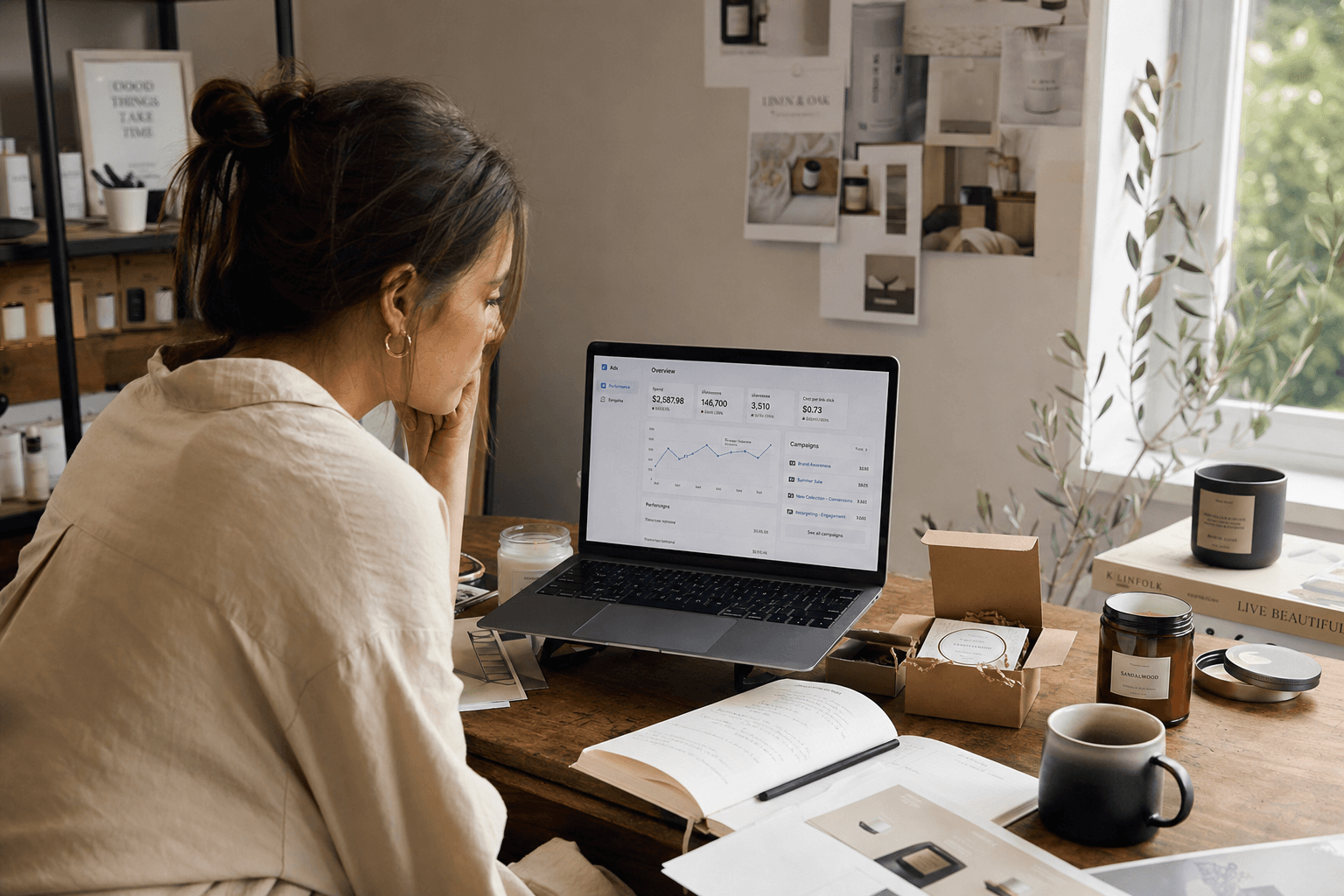
Your customer can't smell a candle before buying. She makes a $55 decision from 'warm amber and sandalwood with a hint of smoked cedar' and a vessel photo, so every ad, email, and product page must make her feel the scent.
Q4 can deliver 40% of annual revenue in 10 weeks, with December driving most of it. You spend January through August building retention and an email list to cut that dependency, and September worrying your ad account, creative, or inventory won't hold. Pressure not to experiment at peak shapes every vendor decision.
Gross margins run 55–70% on paper; after wax, fragrance oil, vessel, wick, labor, shipping, and packaging, contribution margin is closer to 35–50%. A $45 CAC on $58 orders pays back only on reorders within 60–90 days; creative fatigue and October CPMs can push CAC to $70.
Meta and TikTok punish creative fatigue fast, so winning brands run a content engine of burn videos, scent-reveal Reels, ASMR flat-lays, and micro-influencer UGC. A 2-person team finds that engine exhausting.
The Opportunity
Most Candle Brands Are Missing Real, Capturable Demand
Home fragrance is growing online, where nearly 30% of its sales happen. Under the 'lipstick effect,' shoppers in a tight economy cut vacations and big-ticket spending but buy a guilt-free $48 candle.
Gifting is underused for acquisition: 38% of home fragrance buyers purchase for someone else, and a recipient who loves it becomes an organic direct buyer. 'Treat yourself next time' flows can keep her for years.
A second purchase within 60–90 days predicts a $300–$600 LTV on a loyal cohort, 5–10× CAC. The fastest growers engineer it with email timing, scent rotation, and wax melt cross-sells; most competitors leave it to chance.
Competitors miss predictable windows: pumpkin and woodsy scents start converting mid-September; Valentine's Day and Mother's Day are secondary peaks. Ramping October 1 with creative ready beats panicking in November at twice the spend for half the results.
What Most Get Wrong
What Most Candle Brands and Their Agencies Get Wrong
Running the same creative until it dies
Meta and TikTok need rotation every 3–5 days; same-looking vessel-and-flame ads fatigue faster than almost any category. CPMs climb and ROAS collapses; brands blame the platform for a creative-pipeline problem.
Optimizing platform ROAS while contribution margin bleeds
A $58 candle at 4× ROAS looks healthy before $12 shipping, 3% returns, and a $6 fragrance-oil COGS spike. Agencies reporting platform ROAS miss this; profitable brands track cost-per-acquired-repeat-buyer.
Ignoring owned channels until Q4, then panicking
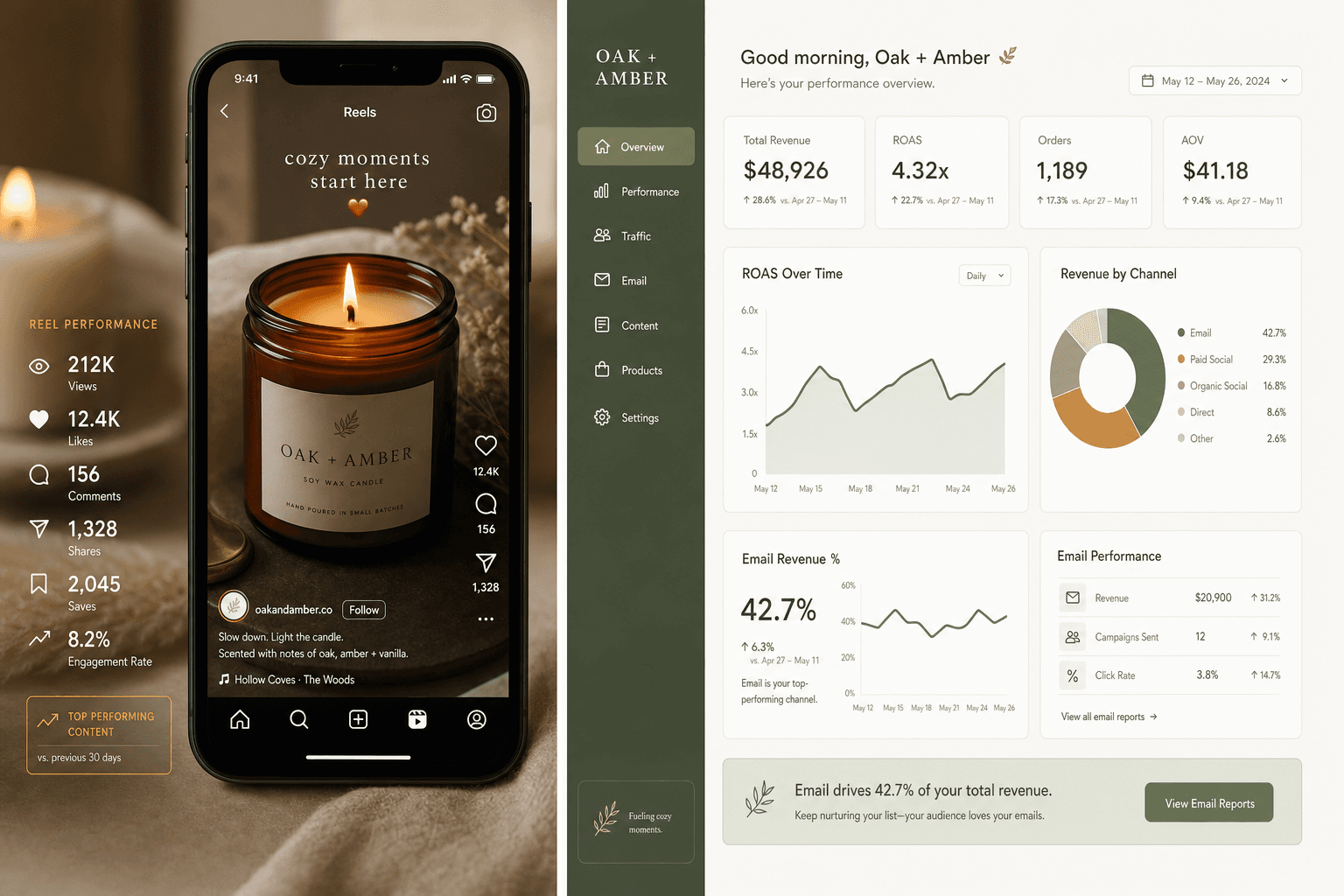
Email and SMS should drive 25–35% of revenue year-round. Brands that treat email as a Q4 blast list pay full Meta CPMs for customers they already own.
Treating Pinterest and Google Shopping as afterthoughts to Meta
Pinterest reaches gift-minded home décor buyers at a fraction of Meta's Q4 CPM, with longer-lasting content; Shopping catches 'luxury soy candle set for her.' Meta-only brands overpay for this traffic.
Letting a new agency rebuild everything at peak
New partners need 60–90 days to learn your account, test creative, and build signal. Rebuild everything mid-peak and you pay that learning-curve tax in your biggest weeks.
Why Now
Why the Weeks Before Q4 Decide Your Candle Brand's Year
Most candle brands still run a few static ad sets, bump budget in October, and hope creative lasts through December. With AI-assisted production, a disciplined brand can test 8–12 creative angles per week instead of 2–3 and find its winners before peak. The brands pulling ahead move budget on real-time performance data, not gut feel.
Bath & Body Works owns mass-market, Diptyque the $80+ gifting tier, Etsy makers 'handmade.' The fastest-growing segment is the DTC middle: artisan quality, $45–$85 pricing, strong brand story, clean ingredients. Brands that build retention and creative engines in that segment first will be hard for newcomers to displace.
Your Q4 creative library, email flows, clean attribution, and gifting-calendar budget pacing take 8–12 weeks to build. Start early to test more winners before peak.
The Mechanism
Where AI Gives a Candle Brand an Edge
Real productivity, not AI theater. Here's where it actually moves a number for candle & home fragrance brands.
Creative
What AI does: AI drafts copy variations for scent descriptions, hooks, and seasonal messaging, then analyzes performance data to find which angle (burn video, flat-lay, or UGC-style) drives the lowest cost-per-purchase before fatigue sets in.
The result: You can test 3–4× more angles per week without adding headcount and enter Q4 with a proven creative library.
Why it matters here: Candle creative burns out fast, and Meta punishes fatigue with CPM spikes as your Q4 budget peaks, so testing speed is a CAC lever.
Social Media (Meta & TikTok)
What AI does: AI finds which scent story, format (Reels, Stories, or in-feed), and hook converts gifters, self-purchasers, and repeat buyers, and routes the matching creative to each segment automatically.
The result: Meta ROAS rises when you stop showing gifting creative to existing customers, and vice versa.
Why it matters here: Women make over 90% of candle purchases, but gifters buy on urgency and self-purchasers on ritual, so treating them alike is costly.
What AI does: AI personalizes send times, tests subject lines, and puts scent education (fragrance-note explainers, rotation guides) before cross-sell and replenishment asks, turning Q4 gift recipients into direct buyers within the second-purchase window.
The result: Email and SMS take a growing share of revenue, cutting your Q4 dependence on paid channels year over year.
Why it matters here: A December gift recipient who loved your candle is your likeliest new customer; without January re-engagement, she buys from whoever retargets her first.
Analytics
What AI does: Attribution modeling separates platform-reported ROAS from contribution-margin-adjusted ROAS using your actual COGS stack, shipping, and return rates.
The result: You catch campaigns that look profitable on Meta's dashboard but fall below your LTV:CAC threshold, and redirect that spend to what holds margin.
Why it matters here: With $12 shipping and 3% returns, a $45 CAC on a $58 order loses money without a reorder, though platform attribution may report 4× ROAS.
Conversion Optimization
What AI does: AI helps test product and bundle pages: sensory fragrance-note copy, AOV-lifting offers (an 8oz + wax melt add-on, a free-shipping threshold $10 above solo-candle price), and gifting-occasion landing pages.
The result: AOV rises, and first-session abandonment falls among buyers who can't make the sensory leap from description to purchase.
Why it matters here: Buyers can't smell the candle, so the product page carries the sale; each point of conversion it gains is pure margin without more ad spend.
Ready to see what this looks like for your candle & home fragrance brands business?
No obligation. A senior strategist will show you exactly where the wins are.
The Strategy
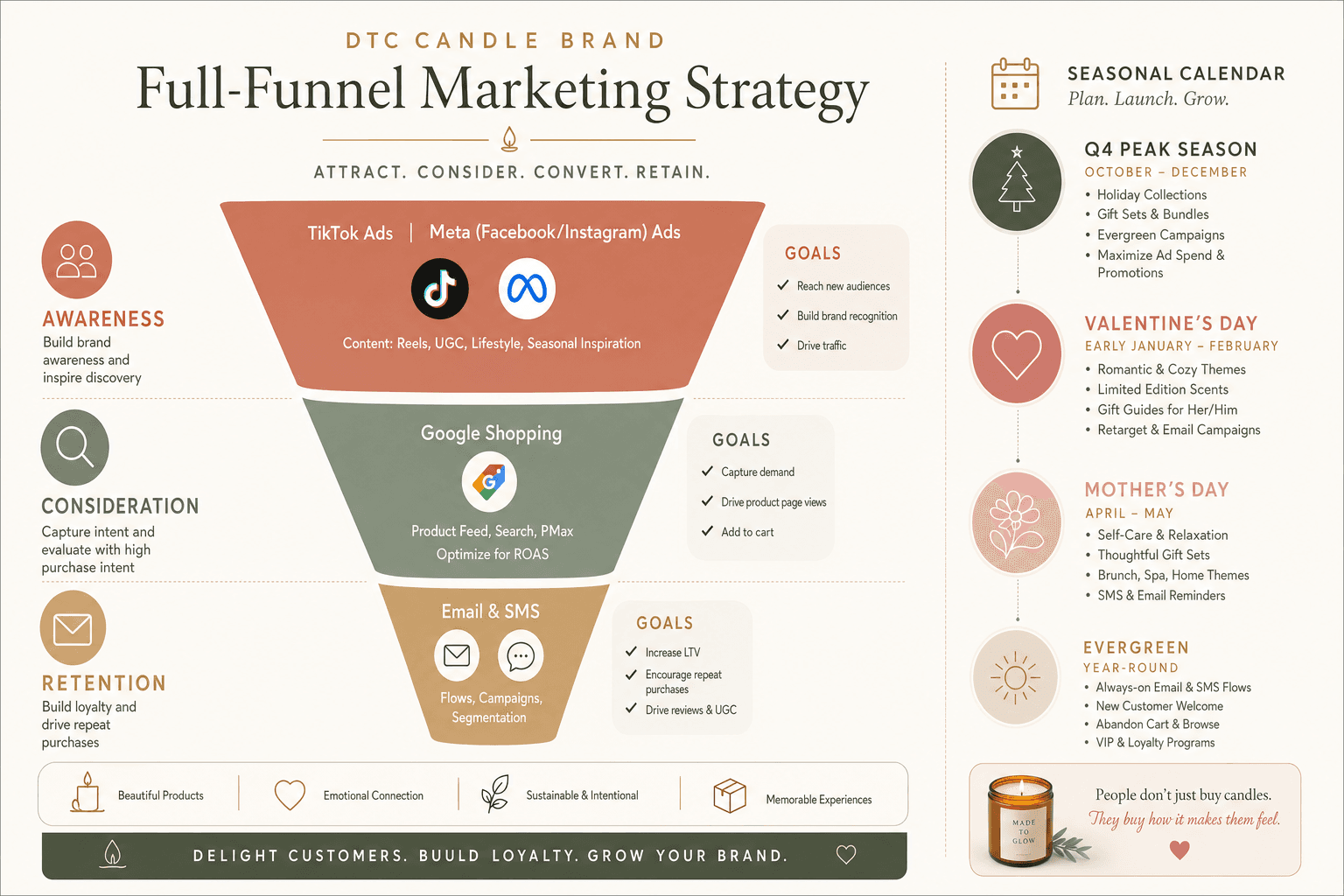
How a DTC Candle Brand Should Run Its Advertising
Meta is the foundation: run at least 6–8 Instagram Stories and Reels variations, rotated ahead of fatigue. Segment creative: gifters (urgent, occasion-specific, 'she'll love this'), self-purchasers (ritual, mood, 'your new evening routine'), and retargeting (scent education, reviews, bundle incentive). Budget shifts among them with the gifting calendar.
Google Shopping captures searches from buyers sold on candles: 'soy candle gift set,' 'clean-burning luxury candle,' 'candle for her birthday.' Those clicks cost less than Meta prospecting and convert faster; clean feeds, strong imagery, and reviews win placement.
TikTok builds awareness and feeds your Meta UGC library; TikTok Shop gives impulse buyers in-feed checkout. Gifting product to home and wellness micro-influencers (10K–100K followers) yields your best-performing paid creative.
Email and SMS protect margin; their revenue share is your secondary KPI. A scent-quiz welcome flow matches subscribers to scents and collects data; post-purchase flows send burn care tips (day 3), a wax melt cross-sell (day 14), and a replenishment nudge (day 45).
January re-engagement of gift recipients is the year's highest-ROI, most-skipped send.
Spend ramps October 1, peaking from the week before Thanksgiving through December 20. Valentine's Day and Mother's Day get dedicated occasion campaigns, not a budget bump. January–March shifts to retention and new-scent launches: less paid spend, more email, loyalty program activation.
The one number that governs this
Manage to blended ROAS, not last-click or platform ROAS, checked against contribution margin. Cut any 4× platform ROAS campaign acquiring customers below your LTV:CAC threshold.
How We Help
What We'd Do for Your Candle Brand
We fix attribution first, because platform-reported ROAS without contribution margin leaves you flying blind. Then we build the paid and owned infrastructure your Q4 runs on.
Analytics & Attribution
We set up contribution-margin-adjusted ROAS tracking, clean pixel and conversion events, and attribution separating gifter acquisition from repeat-buyer revenue.
Paid Social (Meta & TikTok)
We run the segmented Meta testing engine, TikTok campaigns, and micro-influencer gifting that feeds your UGC library.
Google Shopping & Search
We run Google Shopping for gift and occasion searches, with clean feeds, review integration, and bids that capture demand for less than social prospecting.
Creative Production (AI-Assisted)
AI helps us produce scent-story copy, UGC-style ads, and gifting creative beyond your team's capacity, then retire losers before CPMs spike.
Email & SMS Strategy and Automation
We build the scent-quiz welcome flow, post-purchase sequences, early-access campaigns for seasonal drops, and the January re-engagement campaign for Q4 gift recipients.
Conversion Optimization
We test product pages, AOV-lifting bundles, scent education copy, and gifting-occasion landing pages to raise conversion without more ad spend.
Who's Behind This
Who we are, and what makes us different
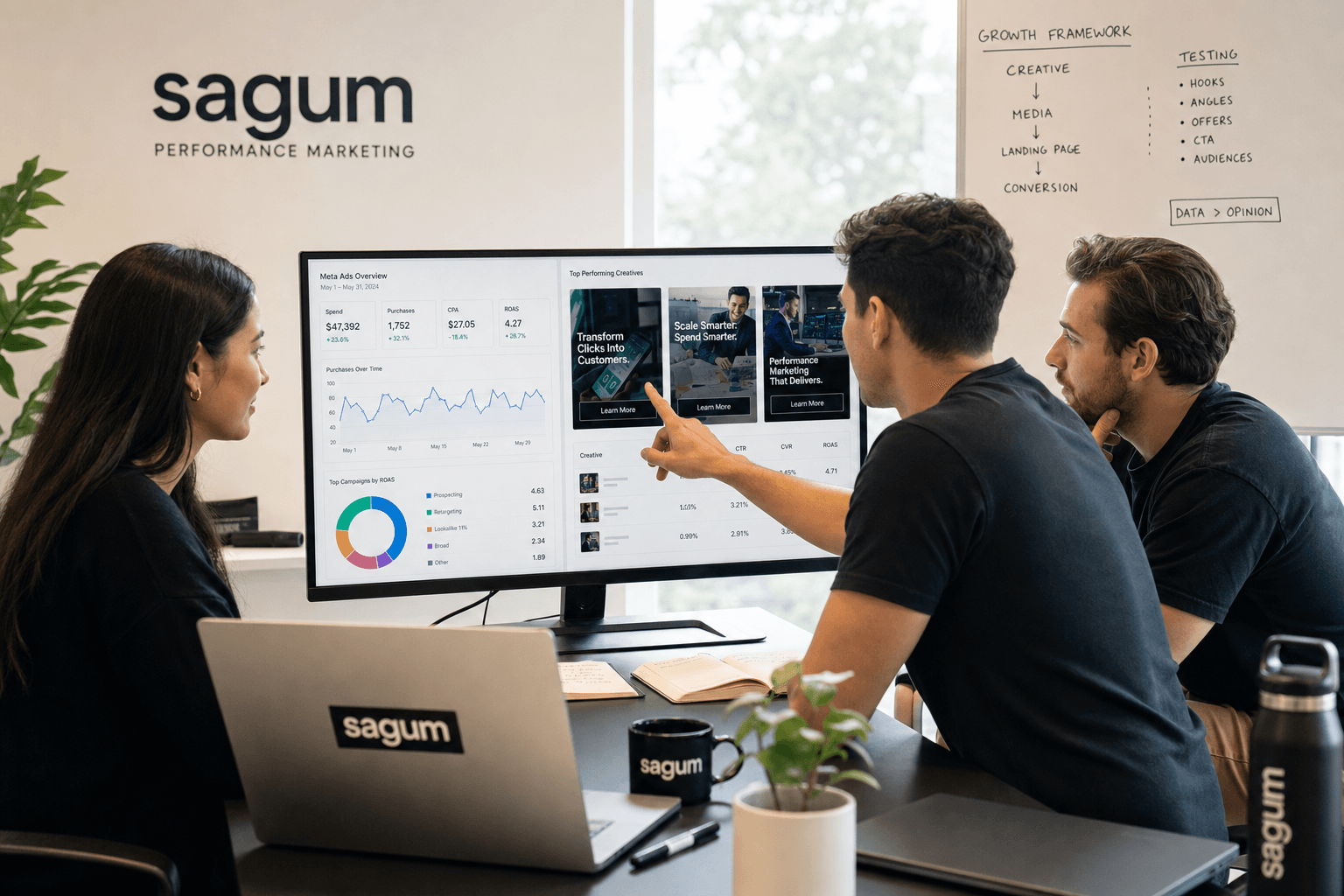
Sagum is a performance marketing agency founded in January 2017 in St. George, Utah. We've spent 8+ years growing real brands and being judged on KPIs, not vanity metrics.
We deliberately limit how many clients we take so each one gets senior attention. We treat your numbers like our own, we never run generic playbooks, and your strategy is built for your business, because shouldn't your brand's marketing be custom to your brand?
Sagum.ai is our AI arm: the same proven operators now build AI into the work wherever it creates real edge, not as theater, but as leverage applied with discipline.
- 8+ years growing brands on performance KPIs, not vanity metrics
- Limited client roster, with senior attention on every account
- An extension of your team; your success is tied to ours
- Custom strategy per brand, never a generic playbook
- AI built in where it moves a number; judgment over hype
“Sagum is a performance marketing agency that's spent 8+ years growing brands by treating their numbers like our own. We take on few clients, never run generic playbooks, and now build AI into the work wherever it creates real edge, not hype. Your strategy is built for your business, and our success is tied to yours.”
“Sagum roughly doubled our bottom line. They treat the work like it's their own business.”
Rachel Nilsson
CEO, RAGS
Proof
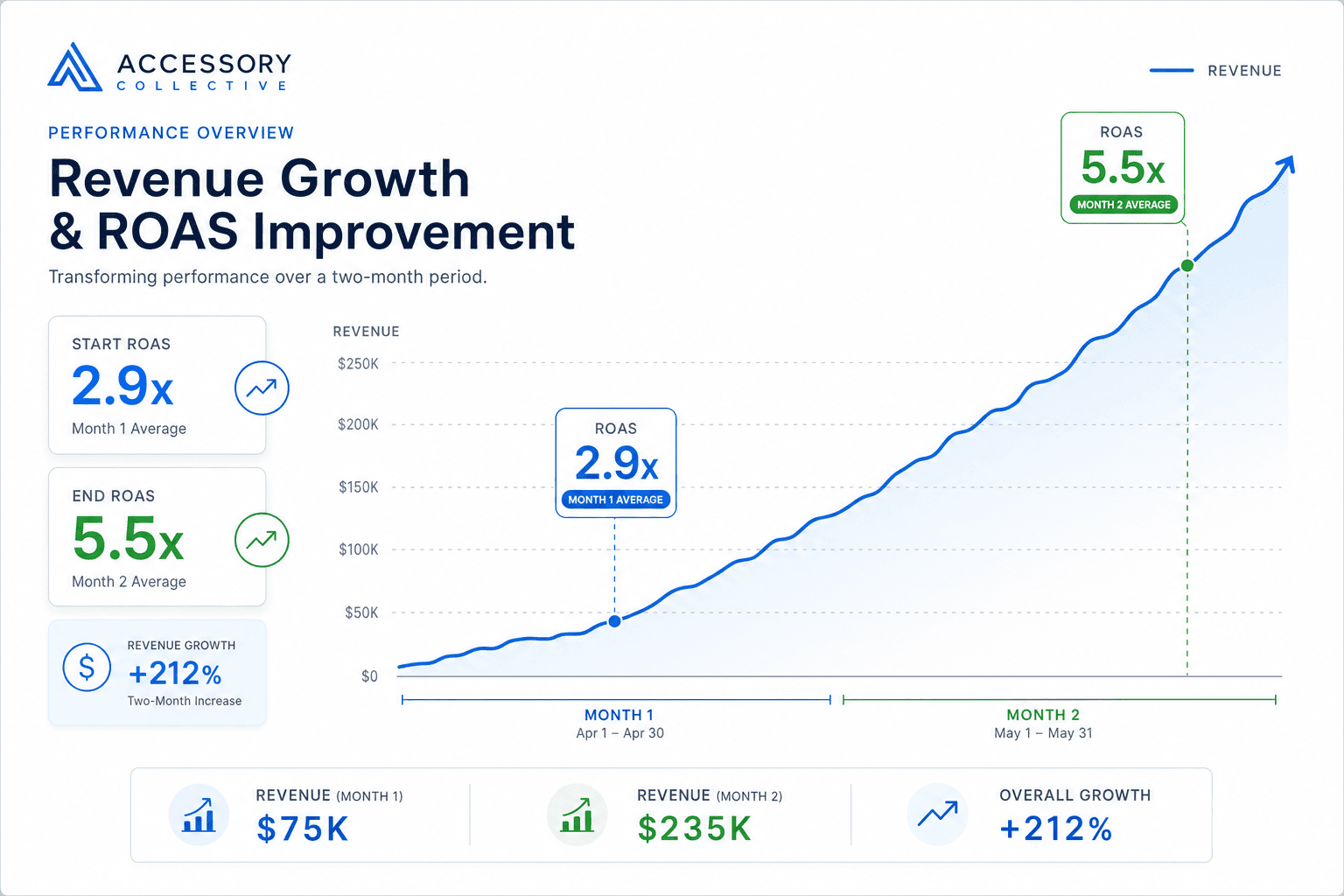
Broke a 2-year ROAS plateau with +115% ROAS at the same spend
House of Jade
Challenge
House of Jade, a home-goods ecommerce brand, had been stuck on a two-year ROAS plateau, a ceiling many candle brands know.
What we did
Sagum restructured the strategy without increasing spend.
Result
ROAS improved 115% at the same spend, and House of Jade had its biggest, most profitable Q4. We'd bring the same discipline to your candle brand.
Your Q4 Is Built Before It Starts. Build It Right.
No obligation. We'll come to the call having thought through your margins, seasonality, and biggest growth lever, and you'll leave with a clear view of what to do first.
Sagum · January 2017 · St. George, Utah · 8+ years