

8+ years growing brands on KPIs, now with AI
Cookware sales through a long deliberation
We make the first order profitable while design-driven buyers take weeks to decide.
8+ years growing DTC brands · Google, Meta & TikTok partner · ROAS-obsessed, not vanity-metric-obsessed



Get your free Growth Gap Analysis
Senior strategist review · response within one business day
Prefer to reach out directly?
The Challenge
Cookware buyers research for weeks, then keep the same pan for years
Your customer doesn't impulse-buy a $200–$400 cookware set. They open six tabs, watch three YouTube videos on ceramic vs. stainless, check your return policy twice, and take two weeks to decide, if they buy at all. That 2–6 week consideration window, longer than agencies assume, wrecks attribution and makes Meta ROAS look worse than it is.
A well-made pan lasts 7–10 years, so your best customers never buy another skillet. Brands cross-selling into bakeware, storage, and accessories survive; the rest pay full CAC on every dollar of revenue.
Groupe SEB, Meyer Corporation, and Newell Brands control 50–60% of mass retail, Amazon commoditizes search and eats margin, and DTC challengers Caraway, Made In, Great Jones, and Our Place taught buyers to expect great design and a compelling story. Rather than price, you compete on trust, aesthetics, and reaching the right buyer at the right moment.
Meanwhile Meta ROAS decays post-iOS 14, CPAs rise, and you're too close to the product to hand marketing to anyone who doesn't understand what you've built.

The Opportunity
Cookware demand peaks in Q4 and Q1, and sets carry the margin
Q4 is your biggest revenue window (holiday gifting, Black Friday, Cyber Monday, wedding registries), gifts are an estimated 20–25% of annual cookware set sales, and Q3 prep decides if you're ready. Most brands underinvest in the Q1 spike that follows ('new year, new kitchen' buying, gift card redemptions, resolution-driven upgrades), which rewards brands with warm audiences.
Set-led brands like Caraway sell sets priced in the hundreds, not single pans, so orders run well above typical kitchen-goods orders. Upgrading buyers are far likelier to buy a set if your creative, landing pages, and email guide them to one.
Winning brands treat cookware as cooking education: Made In's videos teach a proper sear on stainless steel, content that compounds where paid-only ads don't. Build both: paid acquisition profitable on the first order, and email that extends LTV into bakeware, accessories, and upgrades.
What Most Get Wrong
What most cookware brands (and their agencies) get wrong
Optimizing campaign ROAS instead of blended ROAS
Campaign ROAS misses the halo of brand content, influencer seeding, and email. Cutting 'low-ROAS' channels often kills what warms buyers through a 4-week consideration cycle; revenue drops 60 days later.
Running creative below your brand's aesthetic standard
Generic agency creative (stock-photo kitchens, discount-first messaging, UGC that looks shot in a parking lot) signals a cheaper product to buyers who've seen Caraway's ads, hurting conversion and perceived value.
Ignoring the PFAS/toxicity narrative
A growing segment searches for PFAS-free, non-toxic cookware. Without that angle in your ads, landing pages, and SEO content, you lose them, often for good; lost trust rarely recovers.
Using email for broadcasts instead of cross-sells
A pan lasts for years, so email should introduce bakeware, storage containers, kitchen linens, and accessories. Generic 'new arrivals' newsletters leave your one reliable LTV lever almost unused.
Spending Q4 budget without building Q3 audiences
Black Friday winners spend August and September seeding influencers, building retargeting pools, and testing creative. A big October budget, or an agency treating every month alike, delivers mediocre Q4 results.
Why Now
Why cookware brands have a window to pull ahead now
Caraway, Made In, and Great Jones built audiences in the 2018–2022 DTC wave, when Meta CACs were low and iOS attribution was clean. Brands scaling profitably today win on creative volume and velocity, smarter segmentation, and testing more angles per week than competitors test per quarter.
AI-assisted creative testing lets you learn in days instead of months whether 'PFAS-free' beats 'heirloom quality' messaging or a recipe-forward video beats a product-beauty video. Every week you test more, you learn faster than competitors still manually rotating two or three concepts.
Brands that build a creative library, warm retargeting audiences, and tune the Google Shopping feed in the months before each peak go into it ready; late starters scramble. If peak season is ahead, prep now. If last Q4 disappointed, fix it now.
The Mechanism
Where AI gives a cookware brand an edge
Real productivity, not AI theater. Here's where it actually moves a number for cookware brands.
Creative
What AI does: Generates and evaluates multiple ad concepts (PFAS-free messaging vs. chef credibility vs. recipe education) across static, video, and UGC-style formats at once.
The result: You can test 5–8 creative angles per week instead of 1–2 and find what drives set purchases, not single-pan add-to-carts, faster than manual iteration.
Why it matters here: Your buyer is design-sensitive and brand-protective, so creative must convert without cheapening the brand. Whoever tests more each week compounds what they learn every month.
Digital Ads
What AI does: Shifts spend across Meta, Google Shopping, and TikTok in real time based on blended ROAS signals rather than campaign-level ROAS alone, pacing to seasonal demand windows.
The result: Spend follows demand, so you don't underinvest in the six weeks before Black Friday or overspend in March–April, when organic cookware demand bottoms out.
Why it matters here: Gifting seasonality means budget timing often decides whether a quarter lands at 3.5× or 5× ROAS. AI-assisted pacing turns that timing into a system.
Analytics
What AI does: Models attribution across the long consideration cycle and multi-touch paths (organic search, YouTube, Instagram, email) instead of last-click data that undercredits top-of-funnel channels.
The result: You see which channels drive first-order profitability and which look good in the dashboard but claim credit for conversions that would have happened anyway.
Why it matters here: Meta spend that looks low-ROAS under last-click often drives Google Shopping conversions that land 3 weeks later. Fix attribution before touching pacing or creative tests.
What AI does: Builds sequences that place each customer in the cookware journey (new set owner, single-pan buyer, accessory browser) and time cross-sell offers to purchase history and engagement.
The result: Email becomes an LTV engine: customers who won't rebuy a skillet will buy a Dutch oven, sheet pan set, or storage system if prompted well.
Why it matters here: With AI segmentation, you can sell each customer the rest of the kitchen you've built, at a scale no manual email team can match.
Conversion Optimization
What AI does: Analyzes landing and product pages to find where long-cycle buyers drop off (material comparison sections, return policy visibility, PFAS-free credentialing, set-vs-individual-piece framing) and ranks fixes by conversion impact.
The result: You get higher add-to-cart rates on set-based SKUs, the purchases that hit your AOV and CAC targets, and fewer research-heavy buyers abandon.
Why it matters here: Losing a buyer who's spent three weeks researching, your highest-value visitor, to a confusing page or missing trust signal is expensive and almost entirely fixable.
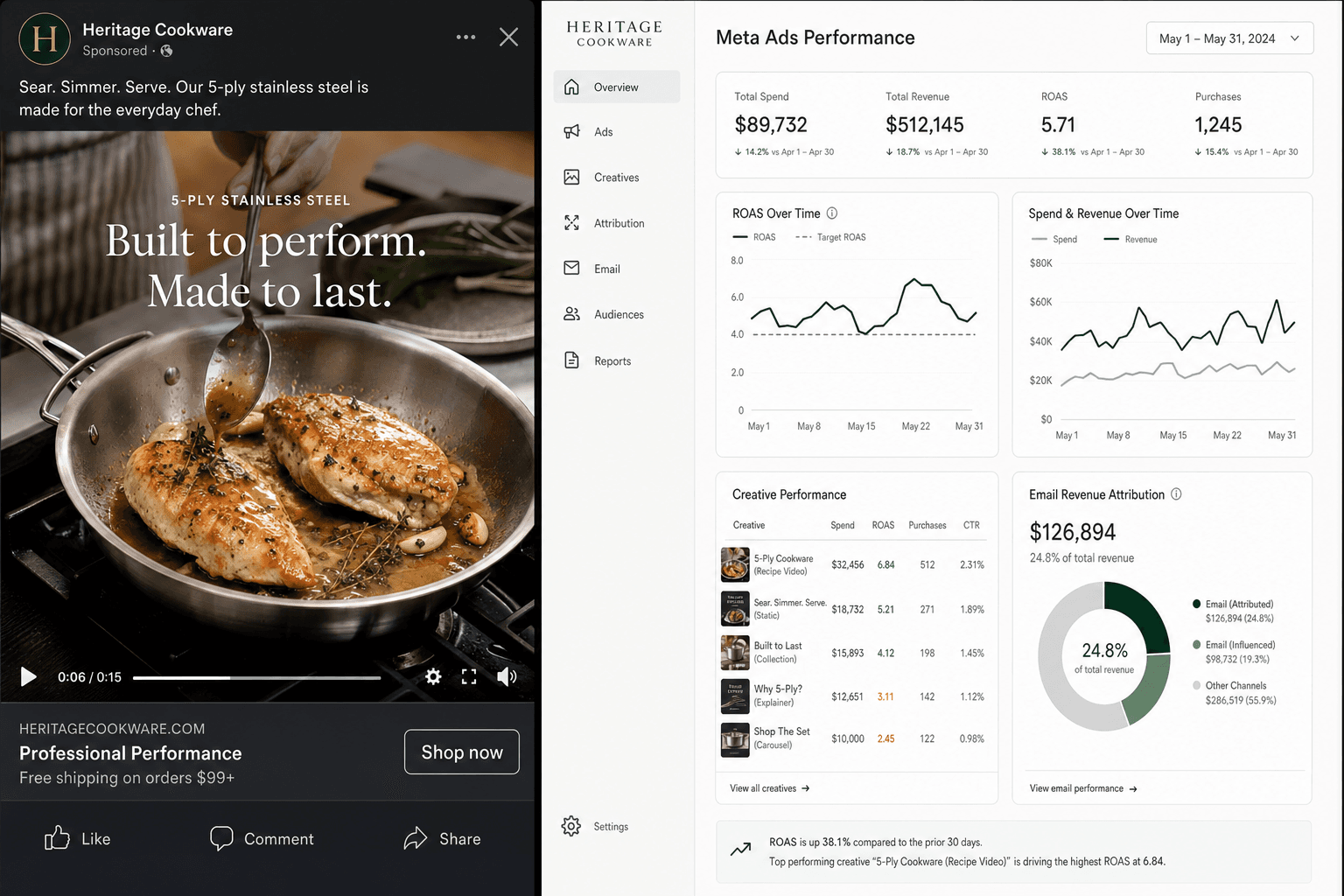
Ready to see what this looks like for your cookware brands business?
No obligation. A senior strategist will show you exactly where the wins are.
The Strategy
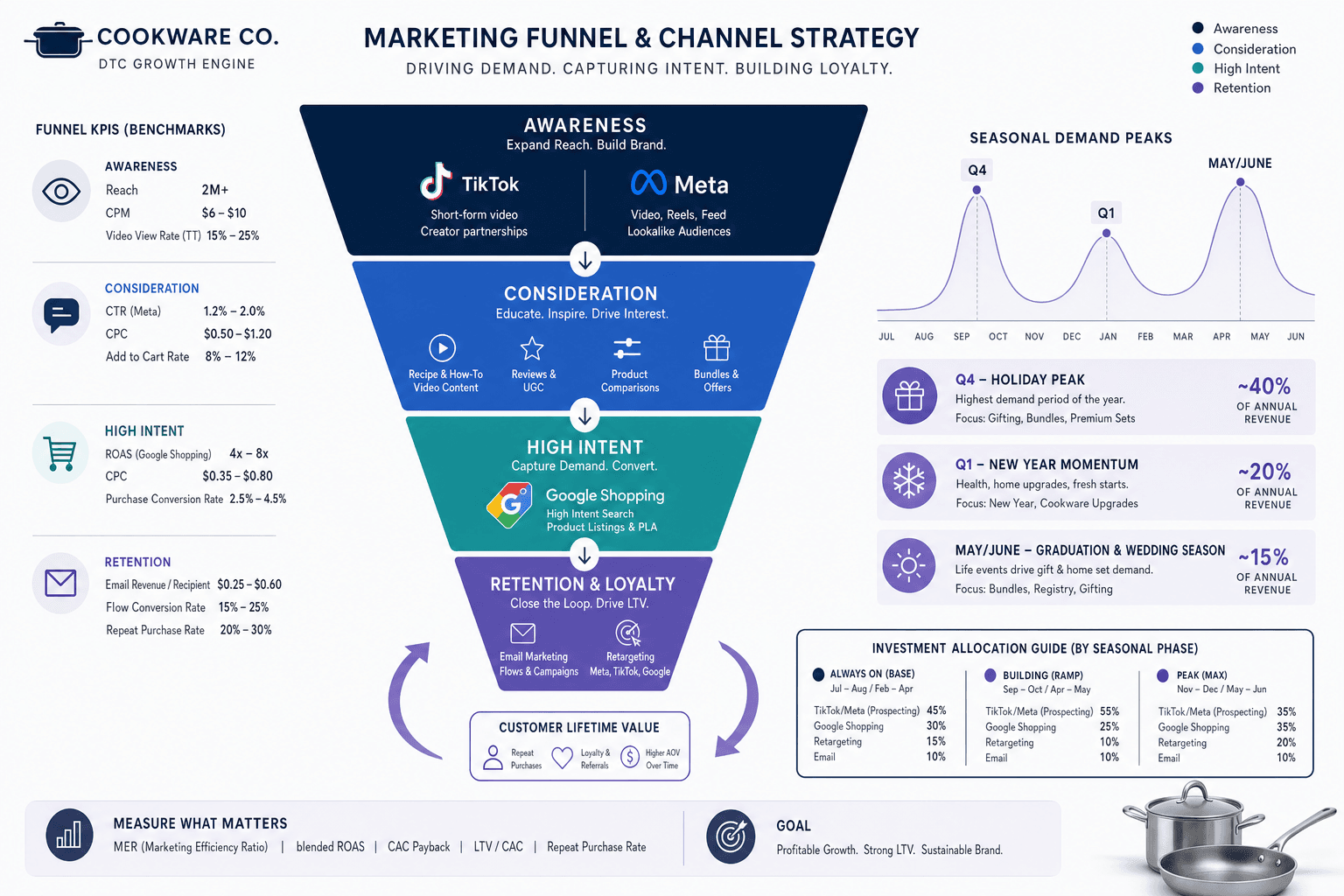
How a DTC cookware brand's performance marketing should run
Repurchase cycles run 7–10 years, so you can't buy customers at a loss and bank on LTV.
Meta (Instagram/Facebook) leads as your core acquisition engine: buyers discover brands there, design-forward creative performs there, and you build retargeting audiences that close the long cycle.
Google Shopping and Search catch in-market queries ('ceramic cookware set,' 'PFAS-free cookware,' 'carbon steel skillet'), typically at 3–4× ROAS with an optimized feed and intent-matched landing page. TikTok covers top of funnel for 22–35-year-olds buying first sets for new households.
Creative is the primary lever: cooking education where the product is present but not the point, PFAS-free and material-transparency content for toxicity-anxious buyers, and aspirational UGC. Weekly testing velocity decides whether results compound or stall.
Q4 (October–December) dominates, Q1 (January–February) is underinvested, and May–June brings wedding and graduation gifting. Spend heavier in Q3, through the August–September demand trough, to build audiences and test creative before peak; pull back in the March–April trough unless you're launching new SKUs or colorways. Flat monthly spend underperforms.
Segment email and SMS post-purchase flows by set, single-piece, and accessory buyer, moving them into adjacent categories within 60–90 days, before 'new kitchen' energy fades.
Before optimizing spend, rebuild attribution for the full multi-touch path; last-click credits the wrong channels over the long cycle.
The one number that governs this
Blended ROAS (total revenue ÷ total ad spend) is the primary KPI; first-order profitability against blended CAC, judged at the set level, is secondary.
How We Help
What working with Sagum on your cookware brand looks like
We audit attribution first, then run the full stack with senior attention on every account and no generic playbooks. Our success is tied to blended ROAS and first-order profit.
Analytics & Attribution Audit
Rebuild attribution for the long cycle and multi-touch paths so blended and campaign ROAS are accurate before any spend optimization.
Meta (Instagram/Facebook) Paid Social
Run the core acquisition engine: design-forward creative, PFAS-free and material-transparency angles, set-based purchase optimization, and retargeting.
Google Shopping & Search
Optimize the Shopping feed and Search campaigns to capture buyers looking for ceramic, stainless, and PFAS-free cookware, judged on first-order profitability, not ROAS alone.
TikTok Ads
Run cooking-education and design-forward content at the top of the funnel for 22–35-year-olds, building awareness and feeding the Meta retargeting pool.
Creative Production & Testing
Test multiple angles per week to find formats that drive set purchases without compromising brand aesthetic.
Email & SMS Automation
Build post-purchase flows, segmented by purchase type, that cross-sell adjacent categories within 60–90 days.
Conversion Rate Optimization
Improve product and landing pages to cut abandonment among research-heavy buyers: lift set add-to-cart rates, surface PFAS-free credentials, and clarify the return policy.
Seasonal Budget Pacing & Strategy
Pace budget to cookware's demand calendar: Q3 audience-building, Q4 peak, Q1 resolution window, and May/June gifting.
Who's Behind This
Who we are, and what makes us different
Sagum is a performance marketing agency founded in January 2017 in St. George, Utah. We've spent 8+ years growing real brands and being judged on KPIs, not vanity metrics.
We deliberately limit how many clients we take so each one gets senior attention. We treat your numbers like our own, we never run generic playbooks, and your strategy is built for your business, because shouldn't your brand's marketing be custom to your brand?
Sagum.ai is our AI arm: the same proven operators now build AI into the work wherever it creates real edge, not as theater, but as leverage applied with discipline.
- 8+ years growing brands on performance KPIs, not vanity metrics
- Limited client roster, with senior attention on every account
- An extension of your team; your success is tied to ours
- Custom strategy per brand, never a generic playbook
- AI built in where it moves a number; judgment over hype
“Sagum is a performance marketing agency that's spent 8+ years growing brands by treating their numbers like our own. We take on few clients, never run generic playbooks, and now build AI into the work wherever it creates real edge, not hype. Your strategy is built for your business, and our success is tied to yours.”
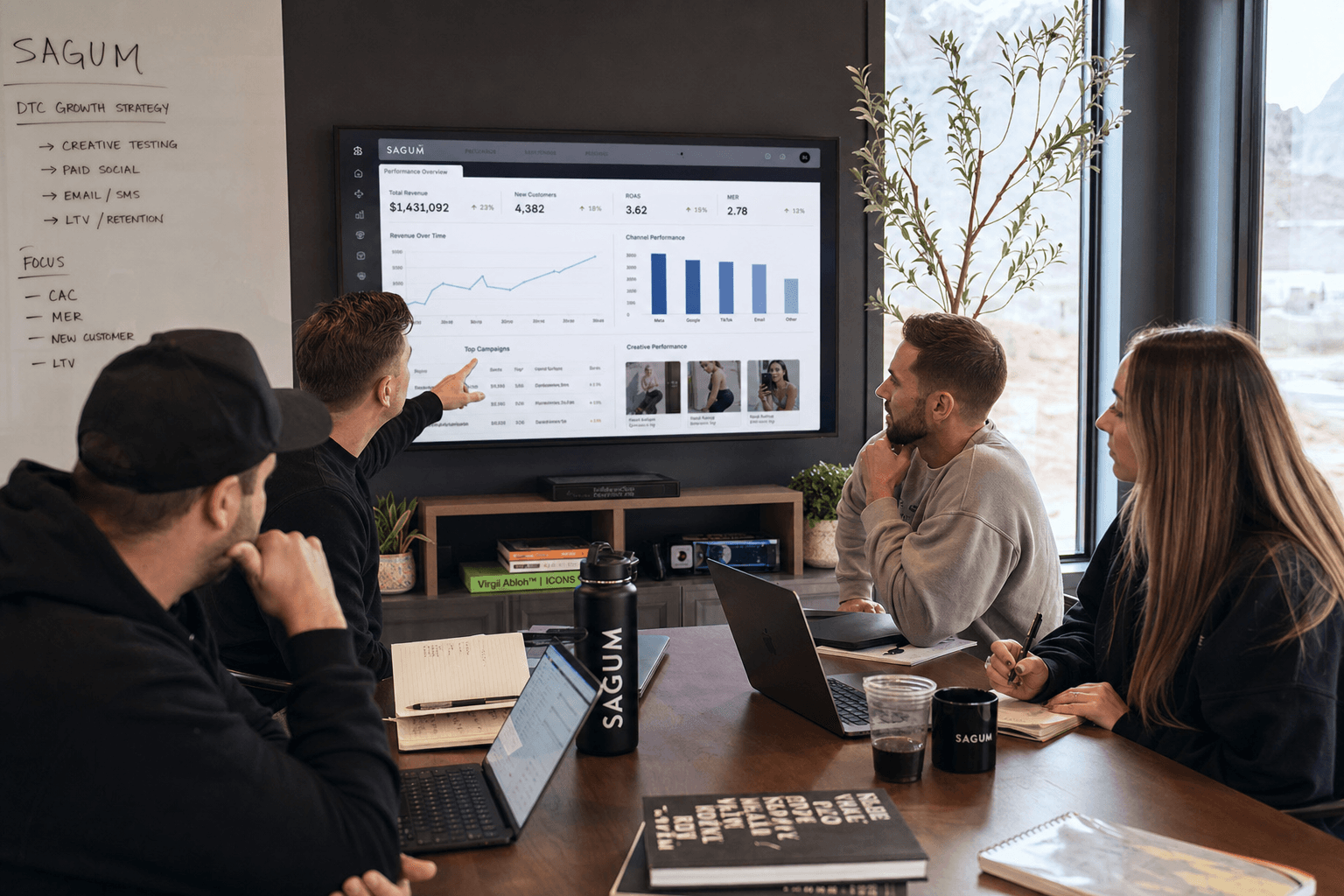
“Sagum roughly doubled our bottom line. They treat the work like it's their own business.”
Rachel Nilsson
CEO, RAGS
Proof
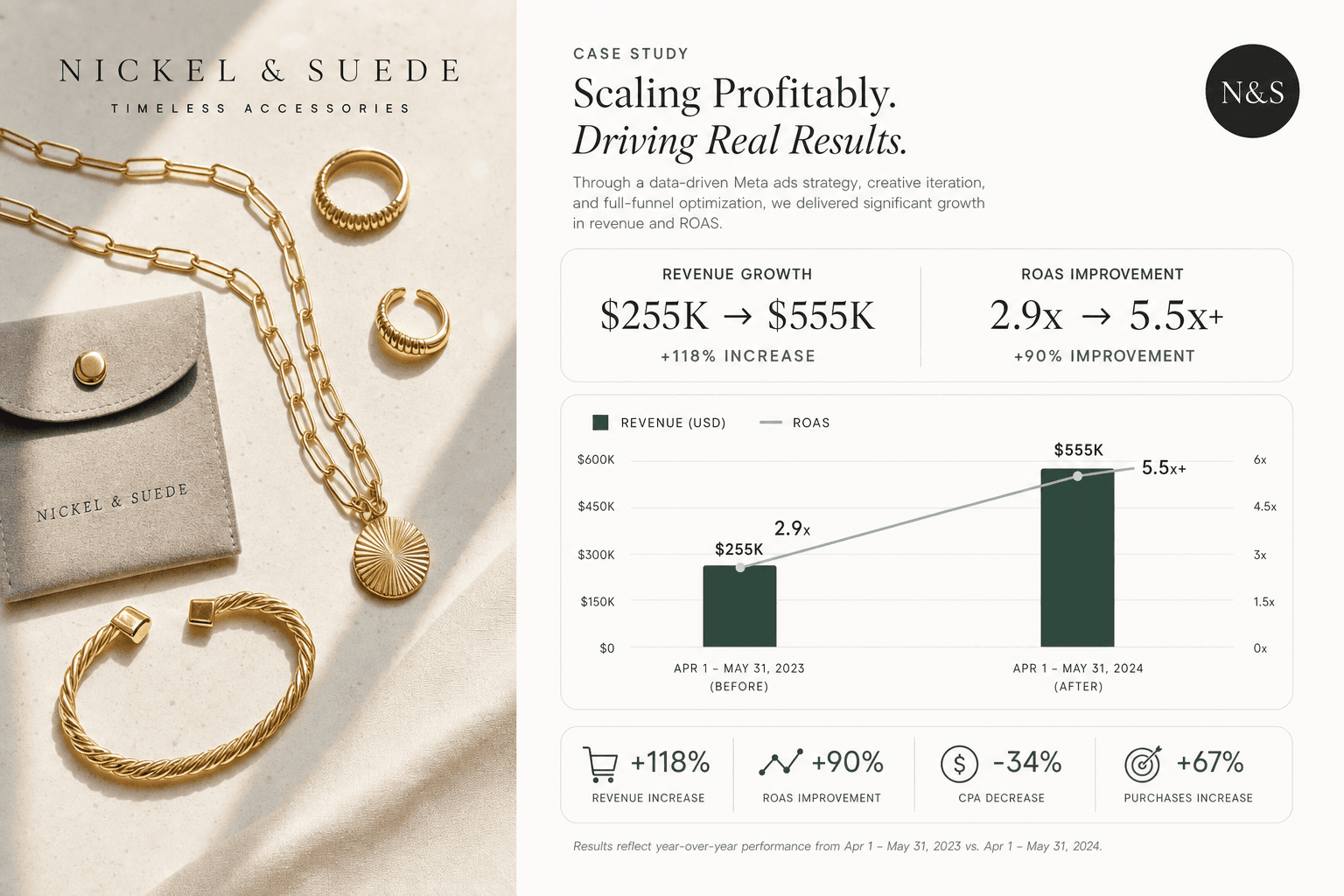
Broke a 2-year ROAS plateau with +115% ROAS at the same spend
House of Jade
Challenge
House of Jade, a home-goods ecommerce brand, had been stuck on a ROAS plateau for two years.
What we did
We restructured its strategy without increasing spend.
Result
ROAS improved 115% at the same spend, and House of Jade posted its biggest, most profitable Q4. That structure-before-budget discipline carries over to a cookware brand.
Make the first order profitable and build cookware marketing that compounds
No obligation. We'll come to the call having already thought about your brand, your category, and where your real growth levers are, not with a generic agency pitch.
Sagum · January 2017 · St. George, Utah · 8+ years