

8+ years growing brands on KPIs, now with AI
DTC Growth for Crowdfunding Brands
We turn your backer list and campaign momentum into a repeatable, profitable DTC business, starting day one post-campaign.
8+ years growing DTC brands · Google, Meta & TikTok partner · AI-powered where it moves the number



Get your free Growth Gap Analysis
Senior strategist review · response within one business day
Prefer to reach out directly?
The Challenge
Your Crowdfunding Campaign Ended. The Hard Part Starts Now.
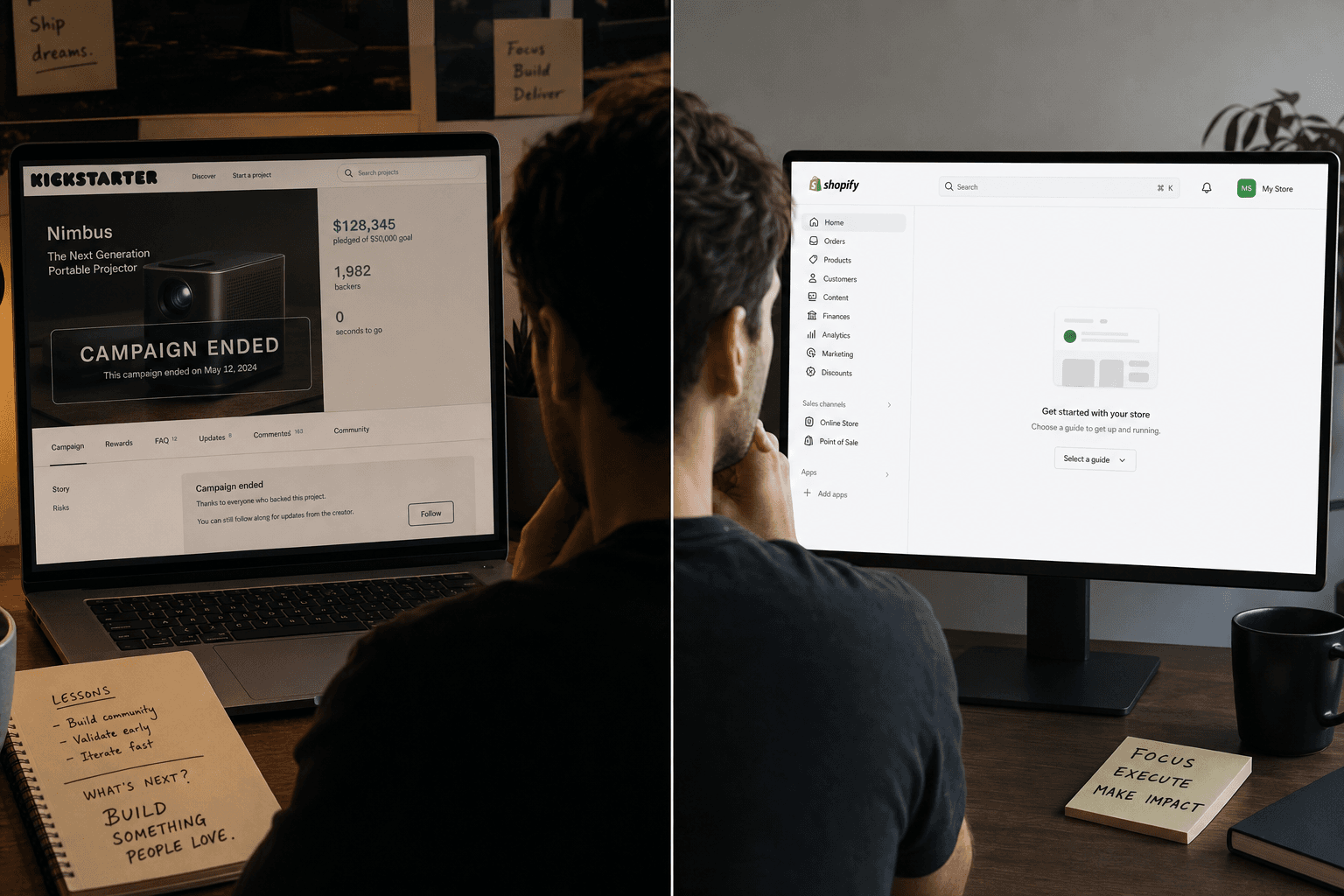
During the campaign, backers commented, press picked it up, and ROAS on your live ads looked clean. Then it closed, and the platform took back its distribution, social proof, and built-in funding deadline.
Now 30% of your backers haven't completed the BackerKit survey, and your Shopify store barely exists, if at all. Kickstarter doesn't expose backer emails natively, so the list reaches Klaviyo only through a pledge manager CSV you migrate by hand. Your 3PL was quoted for steady ecommerce volume, and the backer wave ships as one batch.
Once fulfillment clears, the real problem shows up: cold-traffic CAC. Platform discovery, PR momentum, and deadline pressure subsidized your campaign acquisition. Cold Meta prospecting after the campaign costs structurally more, and founders who benchmarked against the campaign are routinely shocked by evergreen economics.
That's a platform migration, a data infrastructure build, fulfillment operations, and cold acquisition at once, while backer engagement peaks. Most agencies run a standard ecommerce playbook; you need operators who've handled pledge manager migrations and backer fulfillment waves.
The Opportunity
Your Backer List Is Your Best Cold-Traffic Substitute
The first 48 hours post-campaign are your highest-engagement window; used well, they fund your DTC launch.
Treat backers as a segmented CRM asset: tag them by pledge tier in Shopify, recast funders as founding members in a Klaviyo welcome flow, and sell BackerKit add-ons before the survey closes. A well-run add-on window typically adds 10–20% to pledges at near-zero acquisition cost.
Even 500 backers supply purchase data to seed Meta lookalikes and Google Customer Match, audiences a new brand spends months and real CAC building. Loading it before cold prospecting compresses your CAC learning curve.
Brands that scale from crowdfunding to eight-figure DTC collapse 8-to-12 reward tiers into 2-to-3 Shopify SKUs, fix attribution before scaling, and run on blended ROAS, not platform-reported ROAS. Do this within 30 days, while engagement is high, so cold traffic launches on fresh lookalike seeds.
What Most Get Wrong
Mistakes in the First 90 Days That Generic Agencies Make Worse
Folding backer pledge revenue into DTC blended ROAS
Pledges counted against DTC ad spend inflate blended ROAS to 5x or 6x. The real figure, often 2.5–3.5x for new brands, surfaces after you've over-hired and overspent. Exclude pledges.
Launching cold traffic before fixing attribution
Post-iOS 14.5, Meta's reported ROAS is probabilistic. With no DTC pixel history, first-party attribution, or post-purchase survey, you barely know which channels bring profitable new customers; scaling brings CAC shock.
Keeping every campaign reward tier as a Shopify SKU
Early Bird, Super Early Bird, Founder's Edition, and Deluxe Bundle build urgency. As SKUs, they cause 3PL errors, confuse post-purchase email, and lower product page conversion. Few founders collapse them.
Treating the backer list as a fulfillment queue
Most founders drop backers, who paid before the product existed, into one unsegmented Klaviyo list with the welcome a cold opt-in gets, and no Founder's Club tag or post-delivery winback.
Using a standard ecommerce 3PL for the backer wave
Backer fulfillment ships as one batch, often kitted and bundled; then volume drops 70-to-90 percent. 3PLs unfamiliar with BackerKit-to-warehouse transfers and address locks create errors that become backer support tickets.
Why Now
Founders Who Move Before Engagement Fades Own the DTC Economics
In the weeks after your campaign closes, backer engagement peaks, your Meta lookalike seed is fresh, PR momentum lingers, and new customers cost less than they will six months into cold traffic.
Most founders spend that window on fulfillment and Shopify setup, necessary work that doesn't decide structural profitability. Brands that reach healthy LTV:CAC by month four instead of fourteen use it to fix attribution, segment backers, map tiers to clean SKUs, and build Klaviyo flows before the backer wave ships.
A traditional agency might test two to three creative angles a month on cold Meta traffic; AI-assisted workflows can test eight to twelve, so you learn cold-traffic CAC faster. AI-assisted analytics flags gaps between platform-reported numbers and revenue in real time, work that once took a dedicated analyst.
The Mechanism
Where AI Gives You an Edge in the Crowdfunding-to-DTC Transition
Real productivity, not AI theater. Here's where it actually moves a number for crowdfunding-to-dtc brands.
Analytics & Attribution
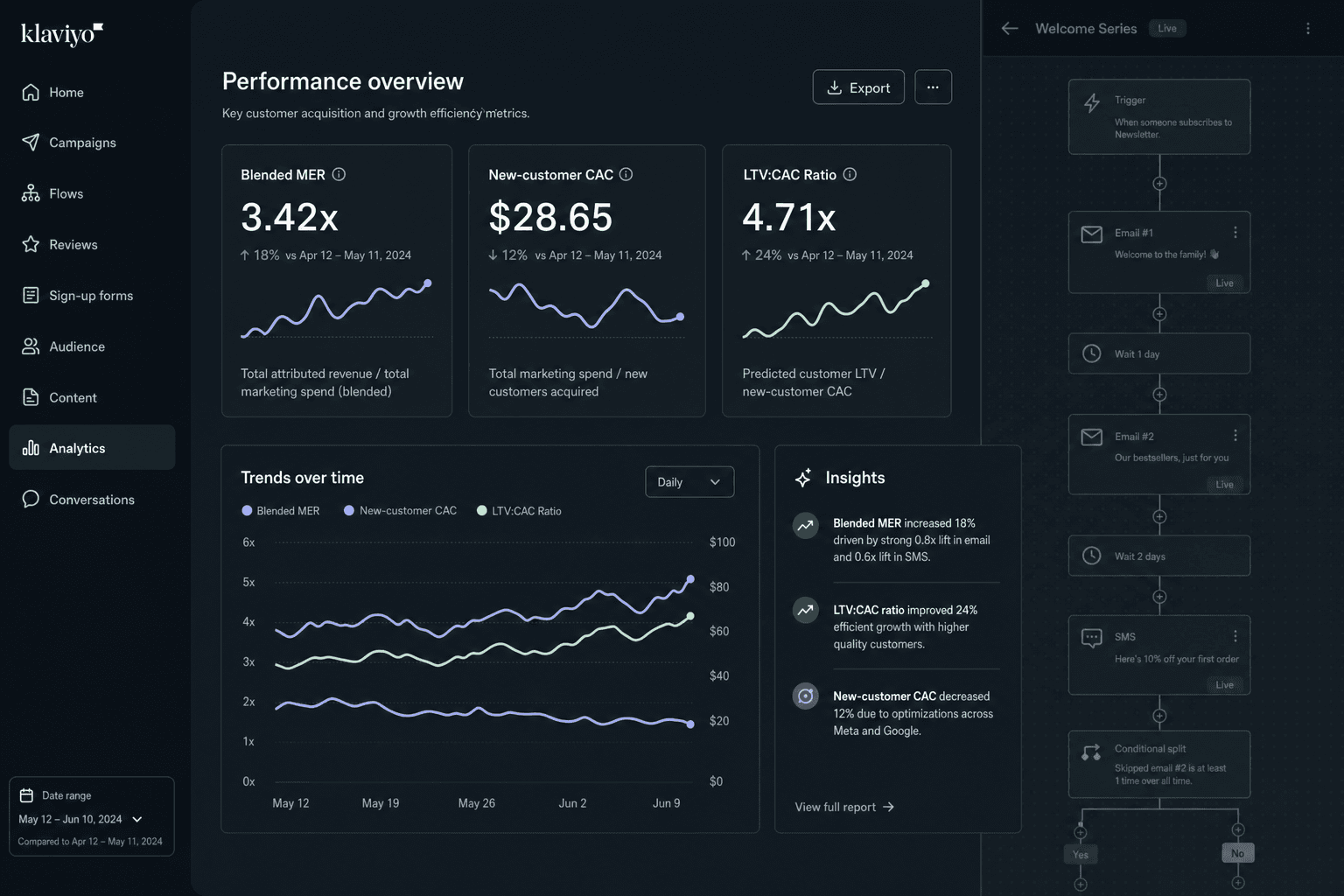
What AI does: AI-assisted first-party attribution reconciles platform-reported ROAS with revenue across Meta, Google, and TikTok, and runs incrementality tests that separate new-customer acquisition from organic demand.
The result: You know real new-customer CAC within weeks of launching cold traffic, and you're not scaling against a blended ROAS padded by campaign revenue.
Why it matters here: With no DTC pixel history, cold traffic from roughly day 30 to day 90 is your riskiest spend, so measurement comes first.
Creative
What AI does: AI tests cold-traffic angles in parallel: social proof from backer milestones, problem-solution from the origin story, and direct response benchmarked against category CPMs. It tests 8-to-12 angles a month, versus 2-to-3 traditionally.
The result: The winning angle for cold Meta and TikTok prospecting surfaces within weeks instead of quarters.
Why it matters here: Other DTC brands launch without your origin story, backer social proof, and campaign milestones. AI tests that edge across more angles, faster than manual work.
Email & Automation
What AI does: AI builds Klaviyo flows from the backer CSV (pledge-tier welcomes, updates timed to 3PL shipping events, winbacks where cohort LTV drops off, consumable replenishment) and tunes subject lines and send times continuously.
The result: Your backers, the highest-LTV audience you'll ever have, get flows built to turn them into repeat DTC customers.
Why it matters here: Pledge fatigue sets in within 30 days post-campaign. A founding-member flow decides whether your list generates 15-to-20% of year-one DTC revenue or goes cold.
Conversion Optimization
What AI does: AI heatmap and session-recording analysis finds conversion leaks in the campaign-to-Shopify handoff: confusing pledge-tier language, missing social proof for cold traffic, and checkout not optimized for Shopify's native purchase path.
The result: Your Shopify store converts cold traffic on the product's value proposition instead of a campaign-page look built for backers.
Why it matters here: Campaign pages convert warm, informed backers. Founders who copy that language into Shopify for cold Meta and Google traffic see conversion 30-to-50% below category benchmarks.
Digital Ads
What AI does: AI builds cold Meta and Google campaigns on the backer seed: Custom Audience and Customer Match uploads before prospecting, lookalikes from purchasers rather than opt-ins, and budget allocation on real-time blended ROAS.
The result: Cold-traffic CAC in the first 90 days runs structurally lower than it would for a brand launching with no purchase history, and budget follows performance.
Why it matters here: The backer seed decays as lookalike models drift, so anchoring cold-traffic campaigns on it while it's fresh is your highest-value paid media move.
Ready to see what this looks like for your crowdfunding-to-dtc brands business?
No obligation. A senior strategist will show you exactly where the wins are.
The Strategy
How Post-Campaign DTC Marketing Should Be Run
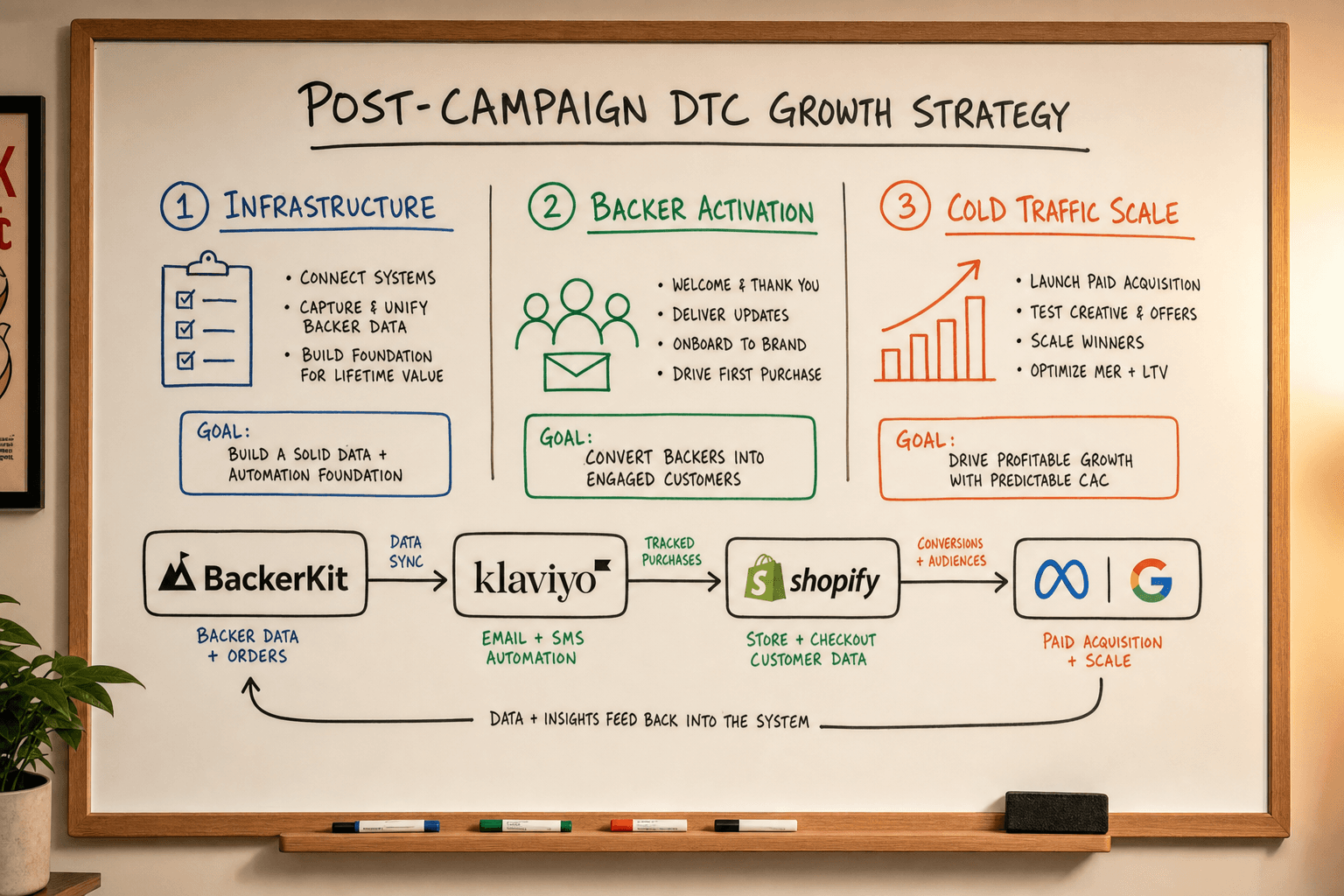
Most crowdfunding founders run DTC as a campaign continuation, with the same creative, urgency, and ROAS benchmark. But DTC is a repeatable acquisition and retention machine that must work without a funding deadline or platform distribution. Three phases run across your first 90 days; order matters as much as tactics.
Phase one, infrastructure, comes before cold spend: migrate backers into Klaviyo by tier, load them as a Meta Custom Audience and a Google Customer Match list, install Triple Whale or Polar Analytics, collapse reward tiers into clean Shopify SKUs, and exclude backer pledges from blended ROAS.
Phase two, backer activation, fills the 30-day post-campaign window with the highest-ROI marketing you'll run all year: founding-member flows, BackerKit add-ons, and a Shopify Founder's Club giving high-value backers early access to new products. It costs almost nothing in paid media and builds repeat-purchase data that makes phase three cheaper.
Phase three scales cold traffic: Meta prospecting on backer lookalikes, Google Search on high-intent category queries, and TikTok creative testing for discovery. Track new-customer CAC apart from blended CAC so a growing retention base can't mask a broken acquisition funnel.
Blended ROAS governs budget throughout, with a floor set by gross margin; 3.0-to-5.0x is healthy for most physical-product DTC brands.
The one number that governs this
Blended ROAS (total DTC revenue ÷ total ad spend, backer revenue excluded) governs; track new-customer CAC separately; target LTV:CAC of 3:1 minimum, 5:1 to scale.
How We Help
What We'd Do for Your Post-Campaign Brand
We run the three phases in order, starting with infrastructure, so every number after it is one you can trust.
Attribution & Analytics Setup
Phase one: we install Triple Whale or Polar Analytics, scope blended ROAS as defined above, and report real new-customer CAC from week one.
Backer List Migration & Klaviyo Architecture
Phases one and two: we migrate backers into Klaviyo by pledge tier and build welcome, onboarding, fulfillment, winback, and replenishment flows before backer orders ship.
Shopify SKU Rationalization & CRO
Phase one: we map reward tiers to clean Shopify variants and audit product pages for cold-traffic gaps; phase three adds continuous CRO.
Paid Social (Meta & TikTok)
Phases one and three: we load backers into Meta Custom Audiences, then build lookalike prospecting and use AI-assisted creative testing to compress cold-traffic CAC.
Paid Search (Google Ads)
Phase three: we run Google Search on high-intent category queries from buyers unaware of the campaign, with budget set by blended ROAS, not Google-reported ROAS.
Creative Production & Testing
Phases two and three: AI-assisted production tests origin-story, social-proof, and direct-response angles to find a winner early.
LTV Cohort Tracking & Retention Strategy
Ongoing: we track LTV:CAC in Lifetimely cohorts by acquisition channel and backer tier, showing which channels build a customer base and which bring one-time buyers.
Who's Behind This
Who we are, and what makes us different
Sagum is a performance marketing agency founded in January 2017 in St. George, Utah. We've spent 8+ years growing real brands and being judged on KPIs, not vanity metrics.
We deliberately limit how many clients we take so each one gets senior attention. We treat your numbers like our own, we never run generic playbooks, and your strategy is built for your business, because shouldn't your brand's marketing be custom to your brand?
Sagum.ai is our AI arm: the same proven operators now build AI into the work wherever it creates real edge, not as theater, but as leverage applied with discipline.
- 8+ years growing brands on performance KPIs, not vanity metrics
- Limited client roster, with senior attention on every account
- An extension of your team; your success is tied to ours
- Custom strategy per brand, never a generic playbook
- AI built in where it moves a number; judgment over hype
“Sagum is a performance marketing agency that's spent 8+ years growing brands by treating their numbers like our own. We take on few clients, never run generic playbooks, and now build AI into the work wherever it creates real edge, not hype. Your strategy is built for your business, and our success is tied to yours.”

“Confirm current quote and attribution from the brand assets before publishing.”
Mandy Gleason
Replica Surfaces
Proof
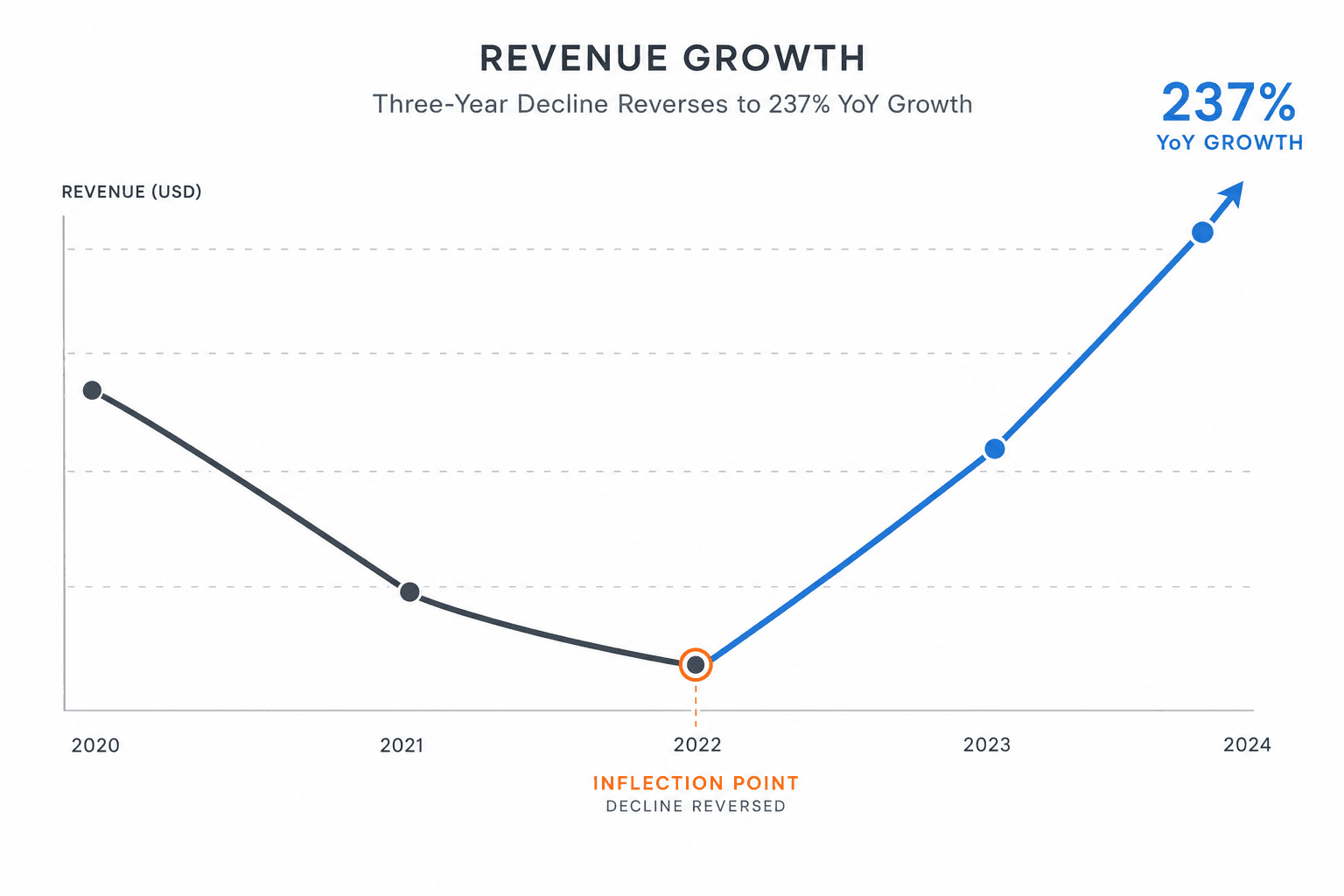
Reversed 3 years of decline to 237% YoY
Bisaddle
Challenge
Bisaddle, a DTC product brand, came to Sagum after three years of decline.
What we did
Sagum redesigned the site and grew email. The same two fixes carry over to a post-campaign store.
Result
Bisaddle went from three years of decline to 237% YoY growth. The redesign doubled site speed and lifted conversion 122%, and email reached 48% of total revenue. Read the full case study at sagum.com/case-studies/.
Your First 90 Days Post-Campaign Set Your DTC Economics
No obligation. We'll map the gaps in your post-campaign infrastructure (attribution, backer activation, cold-traffic readiness) and show you what a 90-day transition plan looks like for your brand.
Sagum · January 2017 · St. George, Utah · 8+ years