

8+ years growing brands on KPIs, now with AI
Home goods buyers save first, buy weeks later
We build for that real cycle: higher blended ROAS and lower new-customer acquisition cost.
Google Ads & Meta Partner · 8+ Years of Performance Marketing · Proven DTC Results



Get your free Growth Gap Analysis
Senior strategist review · response within one business day
Prefer to reach out directly?
The Challenge
Home Goods Is One of the Hardest Categories to Scale Profitably
Home & Garden conversion rates average 1.68%, among ecommerce's lowest. Buyers save ideas on Pinterest for weeks, abandon a desktop cart, then convert on retargeting: a long, non-linear path costly to influence.
Your AOV is an asset. Transactions routinely exceed $150, and furniture or lighting can push well past $500. High AOV also means long deliberation: the gap between a shopper loving your rug on Instagram and buying it is where your CAC lives. Mean category CPA is up more than 8% year-over-year.
On high-intent Google Shopping queries ('linen duvet cover queen,' 'rattan side table'), Wayfair's nine-figure ad spend can bury you. Winning DTC brands out-target and out-creative Wayfair where it's weak (Pinterest, Meta lifestyle feeds, email), turning awareness into full-price direct-site buyers.
Spring (March through May) is your biggest revenue window for soft goods and décor. BFCM matters, but home goods gift less than toys or electronics. Founders routinely over-invest in Q4 and under-prepare for the spring refresh behind their best cohorts. Miss it and you're recovering all year.
The Opportunity
Home Goods Demand Is Returning, and Shopping, Pinterest, and Email Capture It
Home goods buyers are coming back after the post-COVID correction, and they want brands they can trust. Brands filling that trust gap with better creative, retargeting, and email take disproportionate share.
Google Shopping and Performance Max remain home goods' highest-ROAS channel. Top performers hit 4–5x ROAS on Shopping versus a 2.65x category average, so operational and creative quality matter, not budget size alone.
DTC home goods brands underinvest in Pinterest despite CPMs materially lower than Meta's. Forty-six percent of North American adults aged 25–40 use it for home inspiration, and the average user saves over 15 décor ideas per month.
Over a 14–30 day consideration window, email protects margin and closes the gap from 'saved to wishlist' to 'order placed.' Welcome sequences drive 10–20% of new subscriber revenue, and abandonment flows recover 3–5% of carts.
What Most Get Wrong
What Most Home Goods Brands and Their Agencies Get Wrong
Same creative for a $35 pillow and a $600 sofa
Pillows sell on one lifestyle shot, sofas on room scenes, dimension callouts, AR/video, and 30-day retargeting. Brands and agencies using one template misfire by funnel stage, sinking blended ROAS.
Treating blended ROAS as the only number that matters
A 3.5x blended ROAS can come entirely from buyers who'd have repurchased anyway while new-customer ROAS is 1.8x. Without separating new-customer from returning-customer ROAS, you can't tell growth from recirculation.
Ignoring Pinterest while over-investing in TikTok
TikTok home posts average around 119K views, well below fashion and beauty, and virality-chasing brands often find CPAs that don't pencil. Pinterest delivers planning-mode buyers cheaper, at higher AOV.
Flat ad budgets that ignore the spring refresh window
'Cozy bedroom refresh' and 'spring home update' searches spike every spring. Brands on flat budgets underspend while conversion rates peak, then react after the peak.
Broken or unvalidated pixel attribution driving bad spend
After platform updates, iOS changes, or site migrations, misfiring Meta pixels or Google conversion tags can inflate reported ROAS by 30–50%, so brands scale losers until contribution margin exposes them.
Why Now
Why Home Goods Brands Should Build a Performance Edge Now
Buyers who cut home spending after the pandemic returned more selective, research-driven, and swayed by social proof. Brands with creative, attribution, and channel mix dialed in before the spring refresh win a disproportionate share of them, many from competitors still running static campaigns on unvalidated pixels.
AI lets you test 5–8 creative angles weekly, not 1–2 a month, to find the image, headline, and offer that convert your buyer. AI-assisted audience analysis can show which segments respond to 'sustainability and longevity' versus 'seasonal refresh' messaging, so you can target each.
Most DTC home goods brands still run campaigns set up years ago and adjusted quarterly. Teams testing weekly, shifting budget to the spring and fall refresh peaks, and retargeting across Meta and email pull further ahead as AI speeds iteration.
The Mechanism
Where AI Gives Home Goods Brands a Measurable Edge
Real productivity, not AI theater. Here's where it actually moves a number for home goods brands.
Creative
What AI does: AI helps you generate and systematically A/B test lifestyle scenes, flat lays, room-in-context shots, and UGC-style video at a pace manual production can't match.
The result: Testing 5–8 variants per week instead of 1–2 per month finds the visual and copy that convert your buyer within weeks.
Why it matters here: In a category this visual, room scenes versus white backgrounds can mean a 2–3x click-through difference. Refreshing before creative fatigue is a direct ROAS lever.
Digital Ads
What AI does: AI adjusts bids and budgets across Google Shopping, Performance Max, and Meta in real time, shifting spend toward campaigns, audiences, and SKUs earning profitable new-customer ROAS rather than channel ROAS alone.
The result: Budget moves daily, not monthly, on performance signals, cutting spend on campaigns that look fine in aggregate but lose money on new customers.
Why it matters here: In home goods, Shopping ROAS varies widely by SKU category (outdoor/patio, bedding, lighting). Static allocation averages that variance away, and dynamic allocation captures it.
Analytics
What AI does: AI audits pixels and conversion events continuously and models attribution that separates new-customer from returning-customer ROAS, with blended ROAS as the top-line efficiency check.
The result: Spend decisions run on clean data instead of inflated pixel numbers or a last-click model crediting Meta for a sale that email closed.
Why it matters here: Post-iOS 14, platforms credit a Pinterest discovery, Shopping return three weeks later, and email sale differently. Without unified attribution, you optimize for credit, not margin.
What AI does: AI personalizes send times, varies content by segment (new subscriber, one-time buyer, lapsed customer), and triggers flows from browse behavior and seasonal refresh windows.
The result: Welcome and cart abandonment flows perform at the top of category benchmarks, and seasonal campaigns hit the spring refresh and fall décor peaks.
Why it matters here: Buyers need several touches across the 14–30 day consideration window. Email, an owned channel, makes them at zero incremental CPM if sequences match that pace.
Conversion Optimization
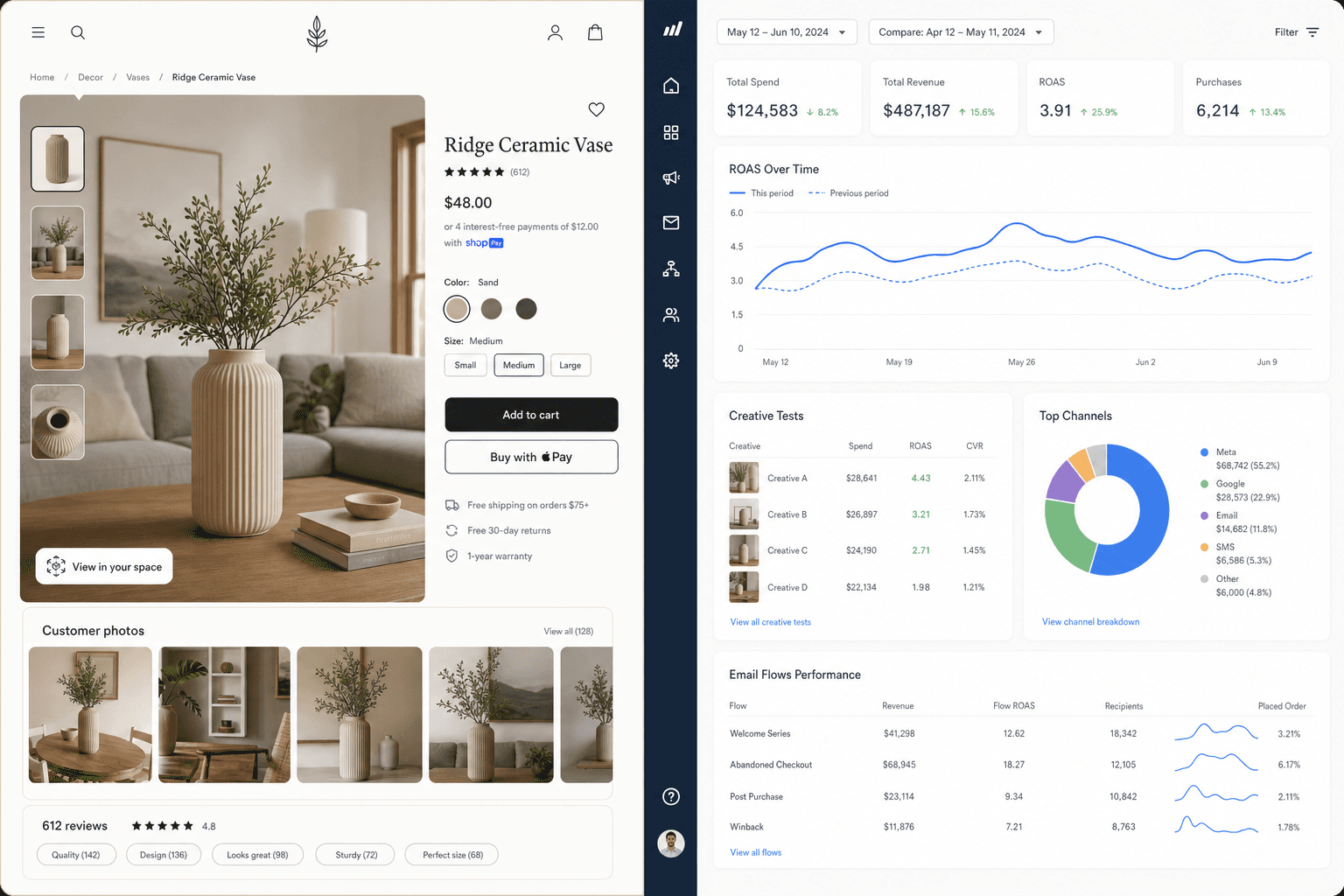
What AI does: AI analyzes landing and product pages to find where buyers drop, especially visual confidence gaps: no room-scene image, missing dimension callouts, weak social proof.
The result: Product pages that answer 'will it look right in my space?' with contextual imagery, AR prompts, and photo reviews convert materially better than spec-bullet pages.
Why it matters here: Home & Garden's 1.68% average conversion rate is a baseline to beat, and every point you add compounds across traffic you already pay for.
Ready to see what this looks like for your home goods brands business?
No obligation. A senior strategist will show you exactly where the wins are.
The Strategy
The Marketing Strategy That Works for DTC Home Goods
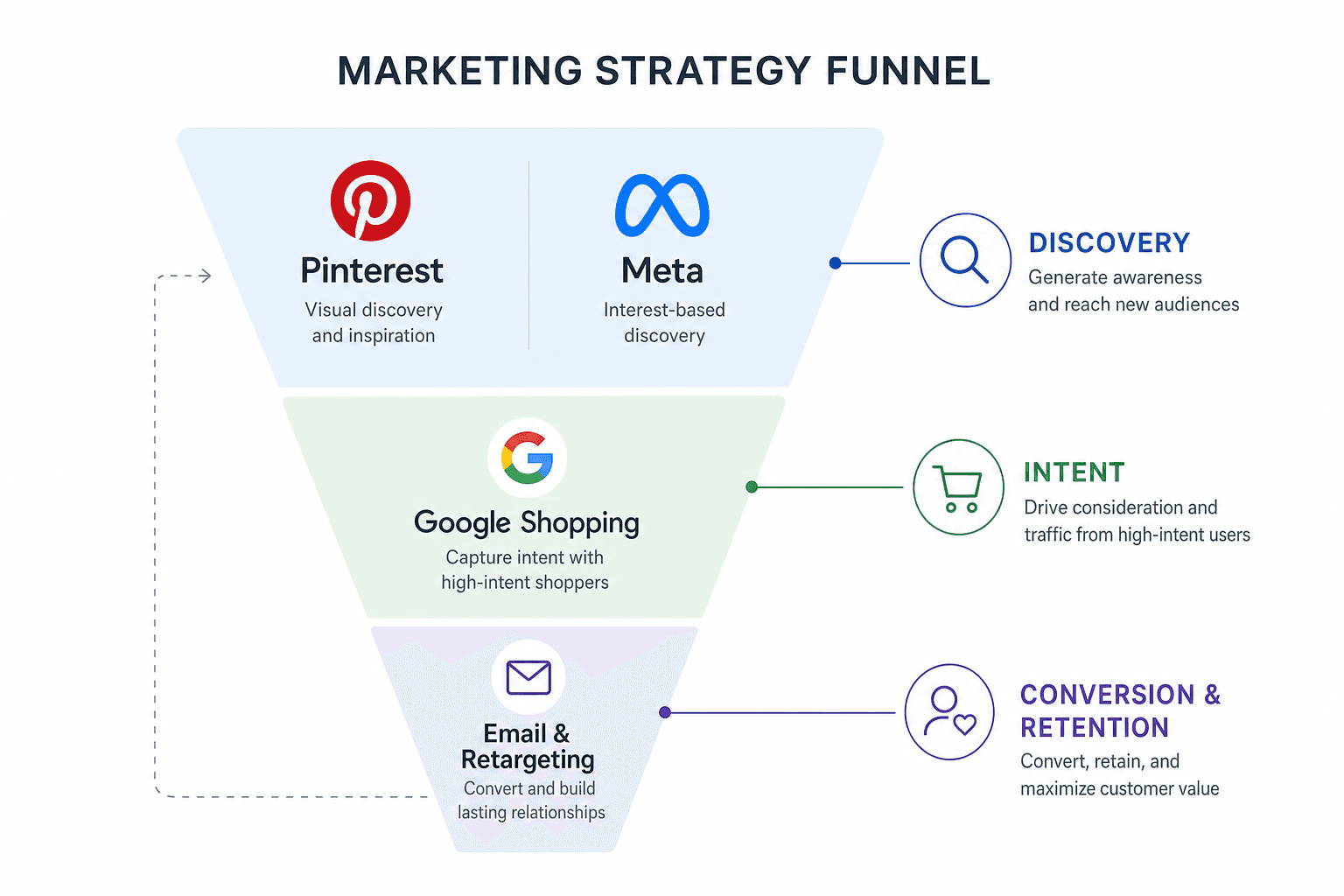
Channel priority follows the buyer's path, and blended ROAS governs, with new-customer ROAS tracked separately. A campaign earning 4x channel ROAS entirely from existing buyers is a retention tool, not a growth engine.
Google Shopping and Performance Max capture bottom-funnel, high-intent queries like 'mid-century side table.' Tight negative keyword lists exclude Wayfair-dominated generic terms you can't win on price, and new-customer and returning-customer bids stay separate.
Meta handles discovery and retargeting. Prospecting shows lifestyle creative, not product-on-white, to interest audiences and lookalikes of your highest-LTV buyers. Retargeting runs 14 days for accessories and 30 for furniture and lighting, and you refresh creative weekly on performance data.
Pinterest gets its own budget: spring refresh (March–May) and fall décor (September–October) campaigns are planned and funded in advance around high-intent aesthetic searches like 'cozy bedroom ideas' and 'minimalist living room.'
Email welcome sequences aim to convert browsers within 7 days, cart abandonment flows run 14–30 days on high-ticket items, and seasonal sends follow the spring and fall peaks. Flows are segmented by AOV tier: a $45 candle buyer and an $800 sofa buyer need different messages.
Attribution is infrastructure: monitor pixel health continuously, reconcile Google and Meta conversions against orders weekly, and calculate blended ROAS monthly to validate channel ROAS against contribution margin.
The one number that governs this
Blended ROAS is the number, checked against new-customer ROAS. A campaign with strong channel ROAS but weak new-customer ROAS isn't a win.
How We Help
What We'd Do for a Home Goods Brand Like Yours
We start where most agencies skip, validating attribution and surfacing new-customer CAC (nCAC), then move through Shopping and PMax, Meta creative testing, Pinterest, and email, each tied to a KPI.
Analytics & Attribution Audit
Validates pixel health and builds blended ROAS and nCAC reporting before any new spend is committed.
Google Shopping & Performance Max Management
Captures existing bottom-funnel demand with campaigns built by SKU category and separate new- and returning-customer bids.
Meta Paid Social (Facebook & Instagram)
Expands the top of funnel with lifestyle-led prospecting, plus retargeting timed to your AOV tier's deliberation window, not a generic 7-day window.
Pinterest Advertising
Runs dedicated spring refresh and fall décor campaigns, launched weeks ahead so they're learning before purchase intent and costs peak.
Creative Strategy & AI-Assisted Testing
Produces and tests room-scene, lifestyle, UGC-style, and product-detail variants weekly, refreshing winners before fatigue sets in.
Email & Automation
Builds welcome sequences, cart abandonment flows segmented by AOV tier, and spring and fall campaigns that convert buyers you've already paid to acquire.
Conversion Rate Optimization
Audits product pages for visual-confidence gaps, then tests fixes aimed at closing the gap to top-of-category conversion rates.
Who's Behind This
Who we are, and what makes us different
Sagum is a performance marketing agency founded in January 2017 in St. George, Utah. We've spent 8+ years growing real brands and being judged on KPIs, not vanity metrics.
We deliberately limit how many clients we take so each one gets senior attention. We treat your numbers like our own, we never run generic playbooks, and your strategy is built for your business, because shouldn't your brand's marketing be custom to your brand?
Sagum.ai is our AI arm: the same proven operators now build AI into the work wherever it creates real edge, not as theater, but as leverage applied with discipline.
- 8+ years growing brands on performance KPIs, not vanity metrics
- Limited client roster, with senior attention on every account
- An extension of your team; your success is tied to ours
- Custom strategy per brand, never a generic playbook
- AI built in where it moves a number; judgment over hype
“Sagum is a performance marketing agency that's spent 8+ years growing brands by treating their numbers like our own. We take on few clients, never run generic playbooks, and now build AI into the work wherever it creates real edge, not hype. Your strategy is built for your business, and our success is tied to yours.”

“After six years, Sagum is our most important partner: trusted, communicative, and caring about our business as if it's their own.”
Long-term partner
6-year client
Proof
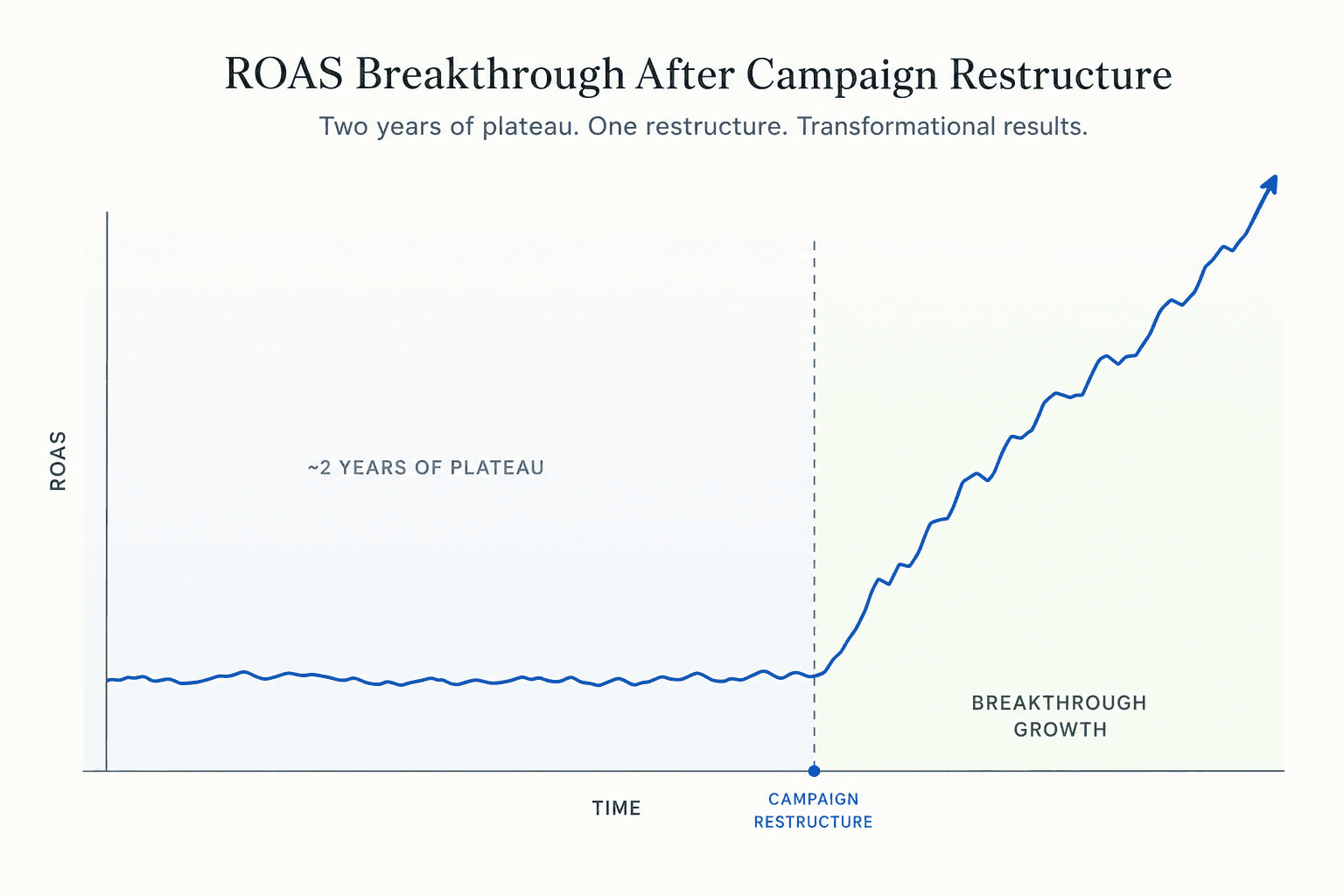
Broke a 2-year ROAS plateau with +115% ROAS at the same spend
House of Jade
Challenge
House of Jade, a home goods ecommerce brand, had been stuck on a two-year ROAS plateau.
What we did
We restructured their strategy without increasing spend, the same discipline we bring to a home goods buyer's long discovery-to-purchase path.
Result
ROAS improved 115% at the same level of spend, and House of Jade had its biggest, most profitable Q4. Read the full case study at sagum.com/case-studies/.
Let's Build Marketing That Grows Your Home Goods Brand Profitably
No obligation. We'll bring a specific read on your channel mix, attribution setup, and biggest ROAS opportunity, built around your brand.
Sagum · January 2017 · St. George, Utah · 8+ years