

8+ years growing brands on KPIs, now with AI
Win mattress buyers who research for weeks
We build the media, creative, and conversion systems that make you their pick, with ROAS you can trust.
8+ years growing DTC brands · Google Ads, Meta & TikTok partner · Judged on ROAS, not vanity metrics



Get your free Growth Gap Analysis
Senior strategist review · response within one business day
Prefer to reach out directly?
The Challenge
Most agencies miss how a $1,200 mattress differs from a $40 t-shirt
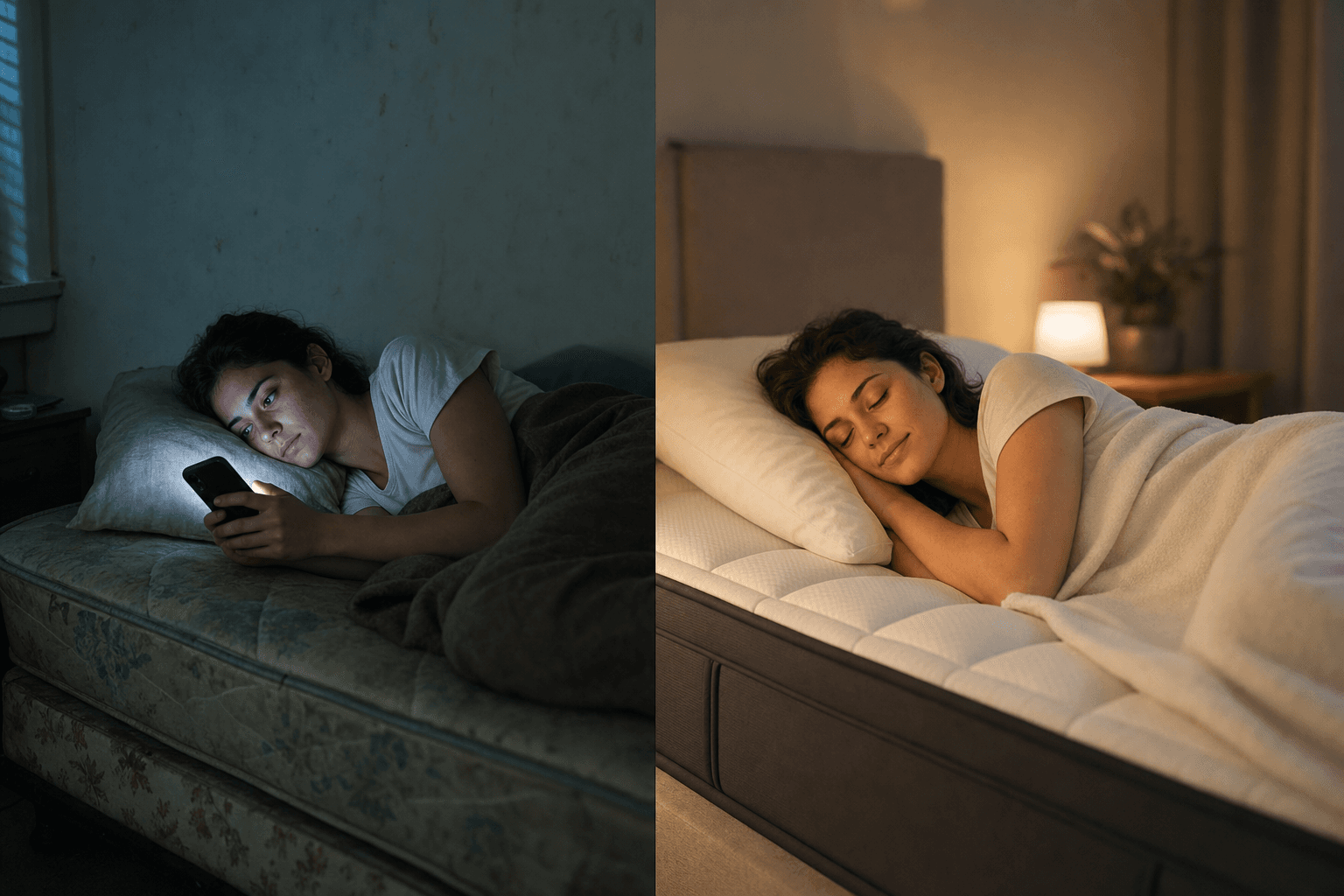
Your buyer arrives with a real problem and budget: six months on a sagging coil mattress, a new apartment lease, or back pain. They're anxious because they can't lie on your mattress first, so they read three Sleepopolis comparison articles, watch YouTube unboxings, and notice the gap between your Trustpilot score and on-site reviews.
Buyers deliberate for 2–6 weeks, so you have to stay in consideration the whole way and convert when they're ready, or you lose to Nectar, Helix, or whoever shows up with the right message.
A strong day-one ROAS can hide a trial return, white-glove delivery cost, and reverse logistics that destroy margin. Your CAC math has to account for freight, refurb inventory, and payback period, not just the ad spend behind the click. An agency reporting blended ROAS before trial returns gives you a number that means little.
Memorial Day is the biggest mattress sales weekend of the year, with Presidents' Day a close second. Most brands still scramble for creative and budget in early May.
The Opportunity
Online passed half of mattress sales; disciplined brands are locking in share
Online hit 52.3% of mattress sales in 2024 and was projected to reach 56.4% in 2025. Online is now the baseline: former Mattress Firm shoppers compare hybrid specs on Reddit and buy on a brand's PDP at midnight.
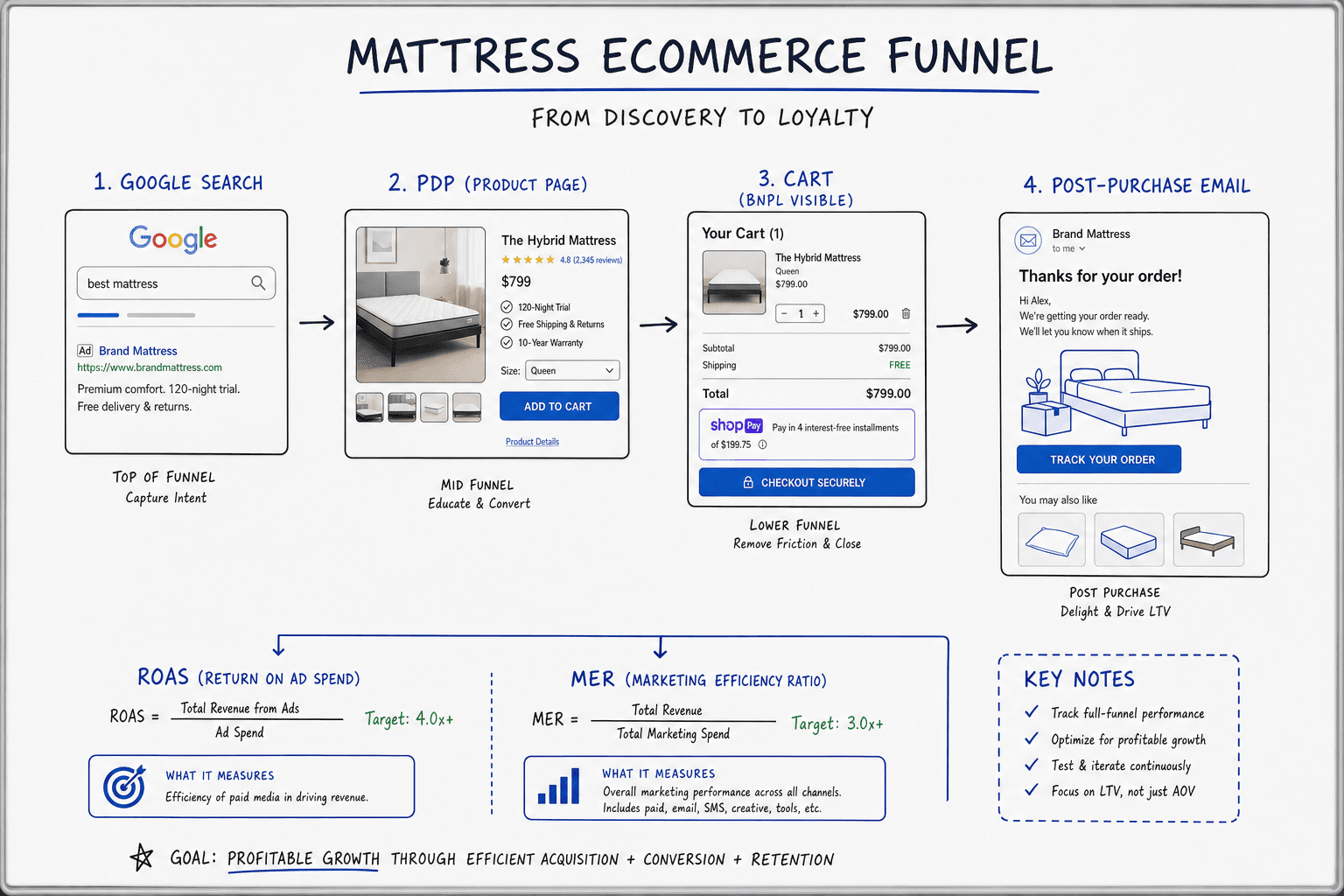
Buyers searching 'cooling mattress for hot sleepers' have a credit card ready and will decide within weeks. Most competitors bid on that query with generic creative and pages that bury the 365-night trial in the footer, and you can exploit that conversion gap.
Pillows, frames, protectors, and sheets bundled at checkout or in post-purchase email separate a 40% gross margin business from one that recovers CAC fast enough to reinvest.
A real product story (CertiPUR-US foam, GOLS-certified latex, cooling technology you can sell outside summer) opens organic and paid ground that Zinus on Amazon and the sub-$500 segment can't reach.
What Most Get Wrong
What mattress brands and their agencies consistently get wrong
Treating Memorial Day like any other promotion
Brands without creative, offers, and budgets locked by early May cede the auction to prepared rivals. New creative on May 24th is a donation to whoever planned ahead.
Scaling on reported ROAS that ignores reverse logistics
A 4x ROAS on a $1,300 hybrid omits trial returns that can run 10–20% in this category, white-glove pickup, and refurb processing. Platform ROAS flatters the channel and hides payback.
Hiding sleep trials and BNPL, as most brands do
Trials, free returns, and Affirm or Klarna answer the top objection, 'I can't feel it before I buy.' 94% of mattresses offer at least a 100-night trial; visibility lowers abandonment.
Running polished brand video when UGC converts better
Unboxings, 'I slept on this for 90 nights' testimonials, and real-bedroom setups beat studio creative on Meta and TikTok. Agencies that default to easier, polished spots waste your social budget.
Ignoring review sites as an acquisition channel
Sleepopolis, NapLab, Wirecutter, and Sleep Foundation top 'best mattress' searches. Without affiliate and content strategy, you miss buyers 2 weeks into research. A 4.2 Trustpilot beside 4.8 on-site kills conversion.
Why Now
Mattress brands adopting AI creative and attribution now are hard to displace
Nectar, Purple, Saatva, Helix, Leesa, Casper, Puffy, and dozens of niche players bid on the same keywords and review-site placements, so the edge comes from precision, not bigger spend. In our experience, most still run set-and-forget budgets and quarterly creative refreshes, leaving early AI adopters an opening.
AI lets brands test five UGC angles weekly (sleep triggers, comfort claims, trial-period framings), finding scalable messages faster than rivals who refresh creative once a quarter. Post-iOS 14, blended ROAS reflects your business; AI attribution catches misfiring pixels that can have you scaling a margin-destroying campaign.
AI pacing pulls Memorial Day budget from a campaign that stalled May 22nd. Brands building these systems before Memorial Day, Presidents' Day, and Black Friday establish a benchmark CAC and creative learnings that make later peaks cheaper.
The Mechanism
Where AI gives mattress and sleep brands a real edge
Real productivity, not AI theater. Here's where it actually moves a number for mattress & sleep brands.
Creative
What AI does: Tests multiple UGC angles weekly on Meta and TikTok across buyer triggers (back pain, hot sleeper, new home, new relationship) and trust signals (trial length, CertiPUR-US, financing) to find the lowest-cost add-to-cart.
The result: You find scalable creative faster and waste less on angles that don't move buyers through a 6-week research journey.
Why it matters here: Weekly UGC testing builds a compounding creative library and finds seasonal angles (cooling in summer, pressure relief in back-pain season) that work outside sale windows.
Analytics
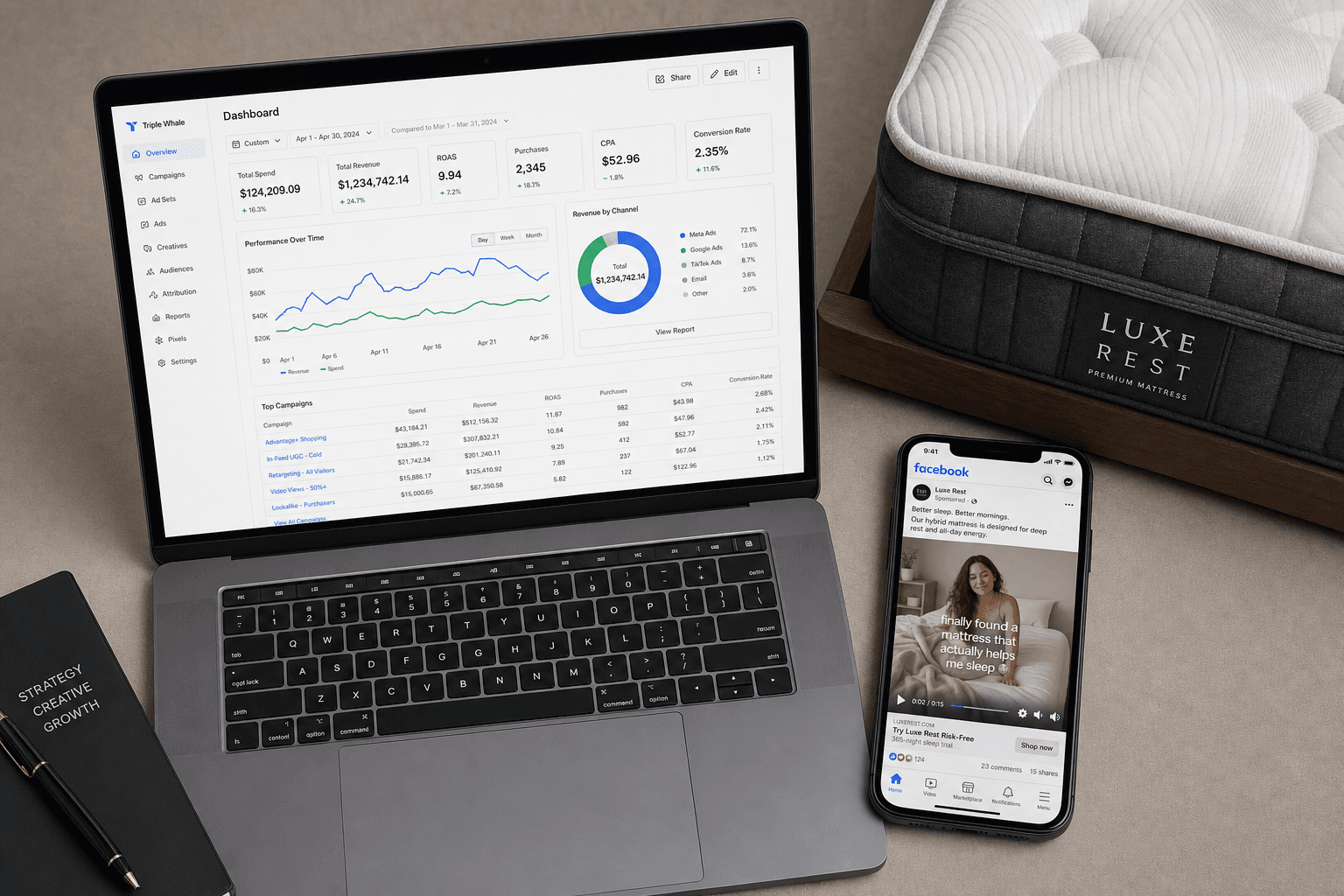
What AI does: Reconciles platform-reported ROAS with actual revenue, factors in the trial window and return rate, and flags pixel misfires or attribution gaps that inflate a weak campaign's numbers.
The result: A trustworthy blended ROAS replaces what Google Ads or Meta claims, so you scale on real data.
Why it matters here: Strong order months can hide slow CAC recovery until returns process 90 days later. Catching attribution errors early keeps you from scaling a problem.
Conversion Optimization
What AI does: Finds PDP and landing-page drop-offs (trial below the fold, BNPL too late in checkout, hidden CertiPUR-US or OEKO-TEX signals) and tests fixes continuously.
The result: The same traffic produces more add-to-carts and completed checkouts, so ROAS improves without more spend.
Why it matters here: Mattress cart abandonment tops 80%; many who leave are one trust signal or financing option from buying. At $1,200+ AOV, CRO pays outsized returns.
Digital Ads
What AI does: Paces budget in real time across Google Search (branded and non-branded hybrid, foam, and latex terms), Meta, and TikTok, toward campaigns driving add-to-carts, away from ones drawing shoppers 4 weeks from buying.
The result: Spend follows purchase intent instead of a flat monthly allocation, concentrating peak-season budgets where they're working.
Why it matters here: Memorial Day's auction is expensive; with budget stuck in weak campaigns, you pay premium CPCs for traffic that won't convert that weekend.
What AI does: Automates email and SMS for fast cart recovery, accessory upsells 7–30 days after delivery, and trial-period sequences that reinforce purchase confidence.
The result: You recover abandoned carts, raise AOV through accessory attach rates, and lower returns by supporting buyers through the trial.
Why it matters here: Mattresses last 7–10 years, so email is your main LTV lever, through accessories and referrals; a lone post-purchase 'thank you' forfeits the most recoverable margin.
Ready to see what this looks like for your mattress & sleep brands business?
No obligation. A senior strategist will show you exactly where the wins are.
The Strategy
How a DTC mattress brand should run its marketing
Build your strategy around blended ROAS calculated on revenue net of trial returns, and read it alongside freight and refurb costs to see what reaches your bank account.
Google Search is your highest-intent, most expensive channel. Non-branded queries like 'best hybrid mattress' and 'mattress for back pain' reach buyers comparing you with Helix, Saatva, and Nectar 1–2 weeks before they decide. Use campaign structure, match types, and negative keywords to win them and cut clicks that don't close.
On Meta and TikTok, prospect with UGC built around specific buyer triggers and retarget with trust signals: trial, return policy, financing, certification. Rotate angles weekly; a buyer who sees one ad four times in two weeks tunes it out.
Email and SMS are mandatory here, since most high-intent visitors abandon cart. Fire the abandonment sequence within the hour, run it through the deliberation window, and surface trial and financing. Post-purchase accessory flows change your LTV math from 'one mattress every 8 years' to a number that funds reinvestment.
Plan seasons months out: Memorial Day in February, Presidents' Day in December, Black Friday in August. Brands that ramp spend the week before overpay for CPCs that rivals already bid up.
The one number that governs this
Blended ROAS, the governing KPI, divides total revenue net of trial returns by total ad spend across channels. Platform ROAS is only a signal.
How We Help
What we'd build for your mattress or sleep brand
We fix attribution first, then build paid media, creative, and email around your unit economics and seasonal calendar, with senior operators who treat your blended ROAS as their own.
Attribution & Analytics Setup
Before touching spend, we reconcile platform ROAS to revenue net of trial returns and fix any pixel double-counting conversions or missing returns.
Google Ads (Search & Shopping)
We build Search around high-intent, non-branded comparison queries, with precise bids and negative keywords that filter out expensive research traffic.
Meta & TikTok Paid Social
We test more UGC angles per week than most rivals test per quarter, in a prospecting and retargeting structure spanning the deliberation cycle.
Creative Production & Testing
We produce UGC-style ads for each stage of the buyer's journey (sleep trigger, comparison, trust-signal close) and test them to learn why winners work.
Email & SMS Automation
We build cart abandonment sequences, accessory flows that lift AOV and LTV, and trial-period sequences designed to reduce returns.
Conversion Rate Optimization
We audit your PDP and checkout for the trust and financing gaps above, including review credibility, and test fixes.
Seasonal Campaign Planning
Weeks before the auction gets expensive, we lock creative and stage budgets for Memorial Day, Presidents' Day, and Black Friday.
Who's Behind This
Who we are, and what makes us different
Sagum is a performance marketing agency founded in January 2017 in St. George, Utah. We've spent 8+ years growing real brands and being judged on KPIs, not vanity metrics.
We deliberately limit how many clients we take so each one gets senior attention. We treat your numbers like our own, we never run generic playbooks, and your strategy is built for your business, because shouldn't your brand's marketing be custom to your brand?
Sagum.ai is our AI arm: the same proven operators now build AI into the work wherever it creates real edge, not as theater, but as leverage applied with discipline.
- 8+ years growing brands on performance KPIs, not vanity metrics
- Limited client roster, with senior attention on every account
- An extension of your team; your success is tied to ours
- Custom strategy per brand, never a generic playbook
- AI built in where it moves a number; judgment over hype
“Sagum is a performance marketing agency that's spent 8+ years growing brands by treating their numbers like our own. We take on few clients, never run generic playbooks, and now build AI into the work wherever it creates real edge, not hype. Your strategy is built for your business, and our success is tied to yours.”

“Sagum roughly doubled our bottom line. They treat the work like it's their own business.”
Rachel Nilsson
CEO, RAGS
Proof
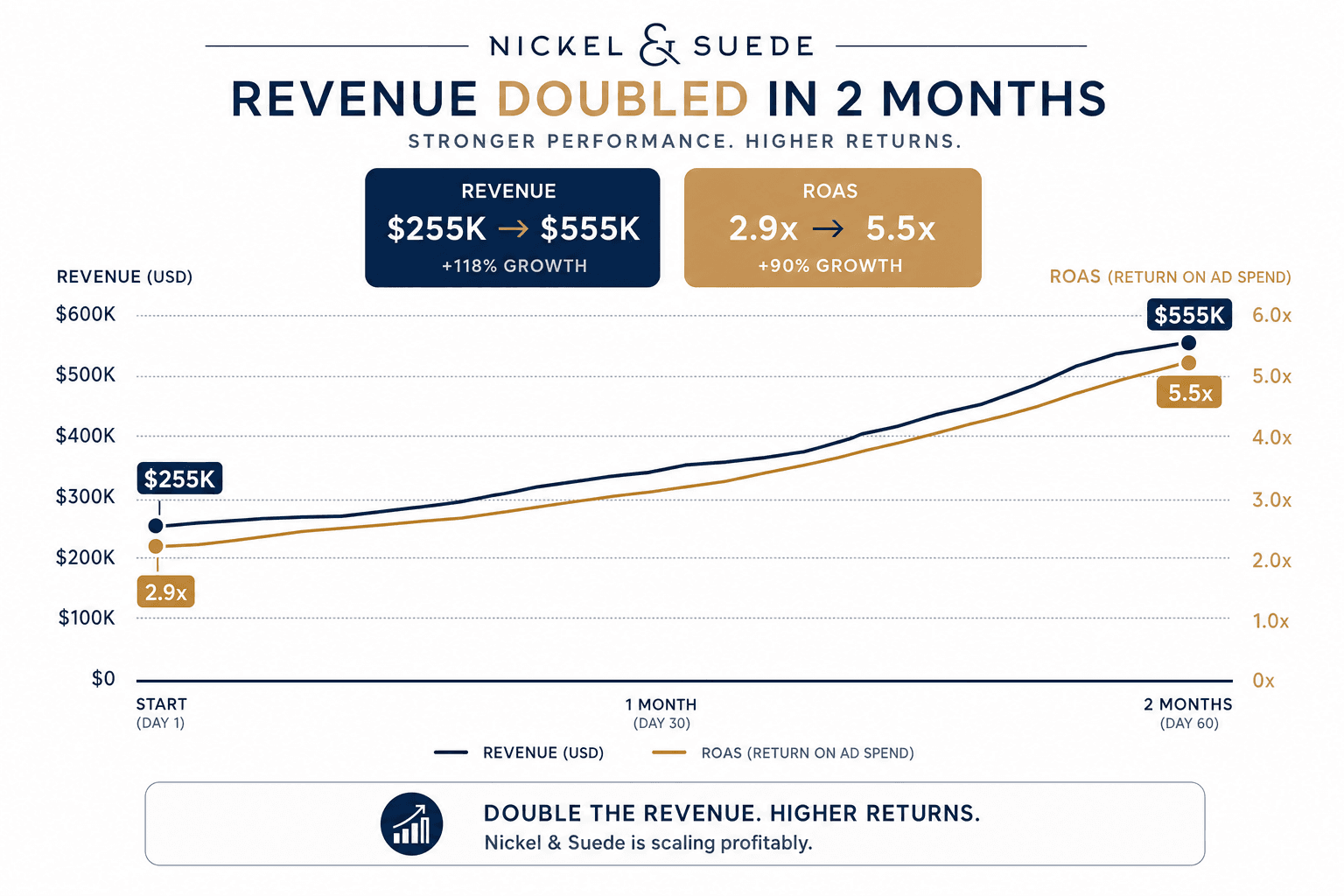
$255k → $555k in 2 months, ROAS 2.9x → 5.5x+
Nickel & Suede
Challenge
Nickel & Suede needed to scale revenue profitably on paid social.
What we did
We ran Meta and TikTok creative testing at volume, the same discipline a mattress brand needs to stay ahead of creative fatigue.
Result
Revenue grew from $255k to $555k in two months, ROAS from 2.9x to 5.5x+ (peaking at 7.95x), and site conversion lifted 34%. See sagum.com/case-studies/.
- Revenue
- $255k → $555k (2 mo)
- ROAS
- 2.9x → 5.5x+ (peak 7.95x)
- Site conversion
- +34%
Let's build the system that wins your next Memorial Day
No obligation. We'll bring a real point of view on your paid media, attribution, and creative, built around how mattress buyers shop, not a generic agency pitch.
Sagum · January 2017 · St. George, Utah · 8+ years