
8+ years growing brands on KPIs, now with AI
Compliant Growth for Licensed Payday Lenders
Compliant marketing strategies built around how short-term borrowers actually find, trust, and choose a lender.
8+ years of performance marketing | Google, Meta, TikTok | Lead-gen specialists



Get your free marketing audit
Senior strategist review · response within one business day
Prefer to reach out directly?
The Challenge
Marketing a Licensed Lending Business Is Unlike Any Other Lead-Gen Problem
Your borrower is not browsing. They have a utility shutoff notice on the counter, a car that won't start, or a rent check due in 48 hours. The decision window is measured in hours, not days, and the first question in their mind is not 'What is the APR?' It is 'Will they approve me, and how fast can I get the money?'
That urgency creates an acquisition environment unlike almost any other lead-gen category. Your online applicant often has several competitor tabs open and will abandon a slow or confusing application almost immediately. Your storefront borrower walks in expecting to leave with cash or a check in one short visit. Speed of funding is the primary competitive differentiator in both channels, not price.
And then there is the regulatory layer that no other lead-gen vertical carries. Google Ads prohibits loans with an APR of 36% or higher and requires repayment terms of 61 days or longer for any personal loan ads it allows. Meta prohibits ads for payday loans, paycheck advances, and short-term loans of 90 days or less outright. TikTok's US ad policy lists payday loans as not allowed. Standard paid search and paid social, the channels most agencies default to, are effectively off the table for your core products.
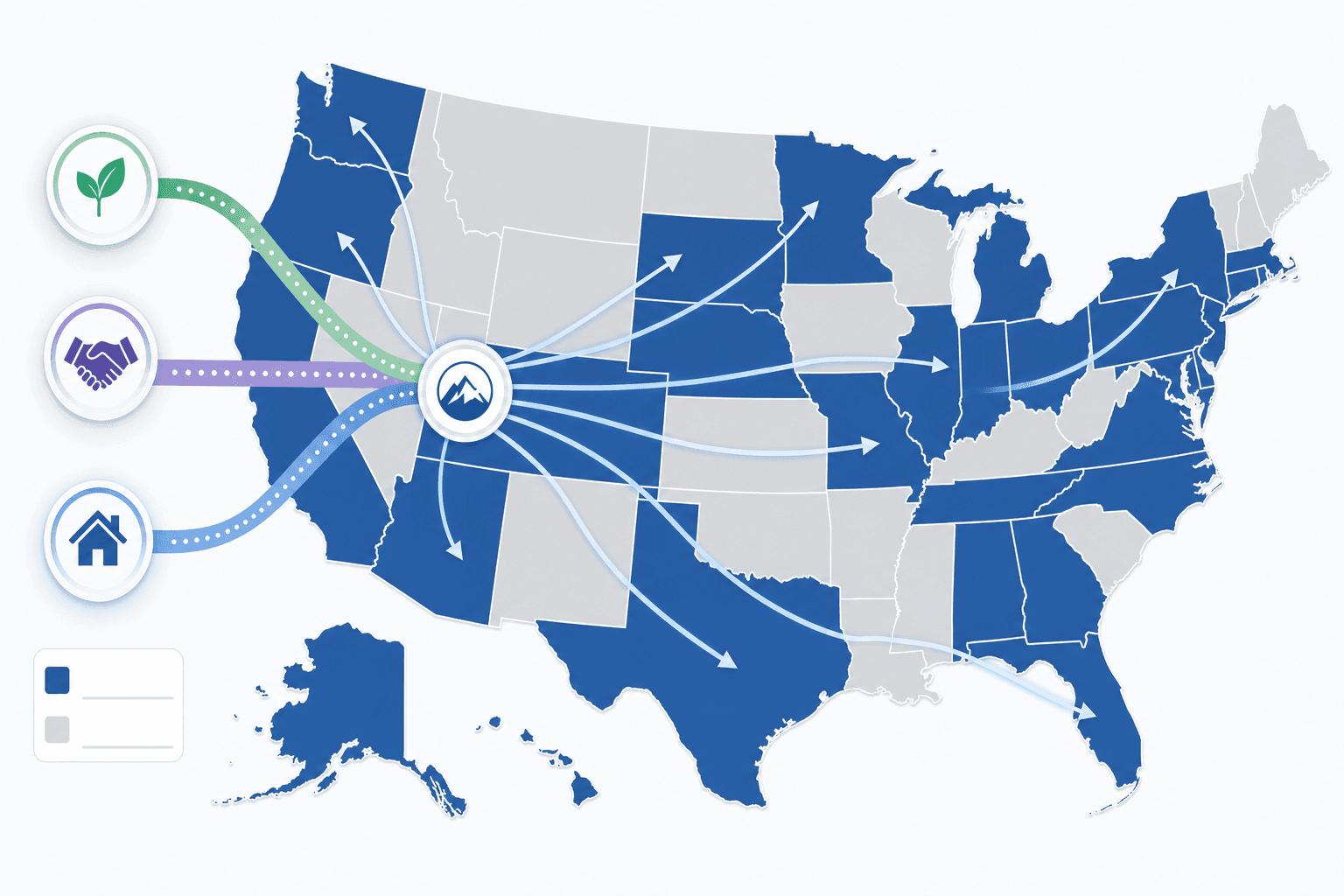
On top of that, your business only exists in the states where you hold a license. Rate caps, fee structures, rollover rules, and legality itself differ by state. A campaign built without that geographic and regulatory precision will either waste budget on traffic you cannot serve or, worse, generate compliance exposure.
Add TILA APR disclosure requirements, CFPB oversight, TCPA rules on every text and CAN-SPAM rules on every email you send to existing customers, and first-payment default rates on bought leads that swing widely with source quality, and you have a marketing problem that demands a strategy built for this space, not a generalist agency running a payday-loan-shaped version of their standard playbook.

The Opportunity
The Demand Is Real, Constant, and Largely Up for Grabs
About 12 million Americans take out payday loans each year, and the need behind that number is persistent. The acute cash shortfalls that drive your borrowers, car repairs, medical copays, overdrafts, end-of-month rent gaps, do not pause when the economy softens.
In California alone, the number of payday loan customers referred by lead generators increased more than 80 percent in a single year, from 92,894 in 2023 to 168,495 in 2024. Online payday loans now account for more than 53 percent of all payday loans in the state. The channel shift to digital is accelerating, and the lenders building strong organic and owned-channel presence now are capturing that growth.
The Google and Meta ad bans have thinned the competitive field in paid acquisition, but they have done something more important: they have made organic search the highest-ROI acquisition channel available to licensed lenders. State-specific pages built with transparent fee tables, state license numbers, and genuine content about your products outperform generic pages and are increasingly the primary way first-time borrowers find a lender they trust enough to apply.
The repeat borrower economics make the upside even more compelling. Subsequent loans by the same borrower accounted for more than 70 percent of all California payday loans in 2024 and more than 80 percent of the aggregate dollar amount. A borrower who cycles six to ten times per year generates six to ten times the revenue of a single transaction. Winning the first funded loan at a sustainable cost per funded loan is the entry point; retaining that borrower through compliant email and SMS is where the margin lives.
Most licensed lenders are not running their affiliate programs with real quality controls, are not building state-specific organic content at scale, and are not using their existing customer list as the retention channel it should be. Those gaps are your opportunity.
What Most Get Wrong
What Licensed Lenders and Their Agencies Get Wrong
Treating cost-per-lead as the governing metric instead of cost per funded loan
A lead network delivering $40 CPL looks efficient until you account for a 20 percent first-payment default rate on that traffic. Even if every lead funded, the cost per loan that actually repays is $50, and it climbs once you count leads that never fund. Lenders who optimize to CPL rather than CPFL consistently overpay for low-quality traffic and underinvest in sources that deliver borrowers who actually repay.
Buying shared leads from aggregators without fraud scoring or ping-tree position controls
A lead sold to four lenders simultaneously, with no real-time identity verification, is a lead you will fund at a loss. First-payment default on unscreened shared leads can run far above your portfolio average. Without exclusive or near-exclusive lead arrangements and real-time fraud scoring at the point of purchase, your affiliate channel becomes a cost center, not an acquisition engine.
Building one national landing page instead of state-specific pages
Borrowers searching 'payday loan Texas' or 'installment loan Ohio' are looking for a lender licensed in their state with fees and terms that apply to them. A generic page without state license numbers, state-specific APR examples, and state-specific fee disclosures ranks poorly in organic search, invites TILA problems if it quotes rates or payment terms without the required APR disclosures, and converts at a fraction of a properly built state page. It also creates compliance exposure with state regulators.
Ignoring the existing customer list as a retention channel
More than 75 percent of all fee revenue in California in 2024 came from customers who made seven or more transactions during the year. Yet most lenders spend almost nothing on CAN-SPAM-compliant email and TCPA-compliant SMS to prior borrowers. A borrower who repaid their last loan and opted in at origination is the lowest-cost, highest-LTV acquisition available. Not marketing to them is leaving the majority of your revenue potential on the table.
Attempting to run Google or Meta ads on core payday products the platforms prohibit
Google bans ads for loans with an APR of 36 percent or higher and requires 61-day minimum repayment terms. Meta prohibits payday and short-term loan ads of 90 days or less outright. Accounts running non-compliant ads get suspended, and suspension history follows the account and the business. Beyond the platform risk, cloaking or policy workarounds expose the lender to regulatory scrutiny. The channel strategy must be built around what is actually available, not what worked before the bans.
Why Now
Why the Next 12 Months Are the Window to Build a Durable Acquisition Advantage
The Google and Meta ad bans did not eliminate competition for your borrower. They reshuffled it. Lenders still running paid search on non-compliant products are accumulating account risk. Lenders who have not yet invested in state-specific organic content are invisible to the borrowers searching right now. The lenders building compliant organic, affiliate, and owned-channel infrastructure today are the ones who will own the local pack rankings and the top organic positions before the next seasonal peak.
Demand has historically run highest in the third and fourth quarters, into the holidays, and lowest in the first quarter, when tax refunds land. End-of-month application volume climbs as bills come due. These are not unpredictable events; they are a calendar you can build toward. The lenders who have their Google Business Profiles optimized, their state-specific pages ranking, and their affiliate quality controls in place before the holiday peak hits will capture that demand at a fraction of the cost of lenders scrambling to react.
AI is now a practical tool for scaling the content and conversion work that organic and owned-channel strategies require. Building 30 state-specific landing pages with accurate disclosures, testing application flow variations to find the version that converts without losing applicants in the first few screens, scoring affiliate lead quality in real time, and personalizing retention messages to prior borrowers by loan type and repayment history are all things that took months of manual work two years ago and can now be done in weeks with the right systems. The lenders who build those systems now will have a structural cost-per-funded-loan advantage that compounds every quarter.
The Mechanism
Where AI Creates a Real Edge in Short-Term Lending Marketing
Real productivity, not AI theater. Here's where it actually moves a number for payday lenders.
SEO and State-Specific Content
What AI does: AI systems build and maintain a library of state-specific landing pages, each with accurate license numbers, state-specific APR examples, fee tables, and compliant content, then monitor ranking positions and flag pages that need updates when state regulations change.
The result: A lender operating in 15 licensed states can have 15 properly built, continuously maintained organic pages competing for high-intent local queries without a content team of equivalent size.
Why it matters here: Organic search is now the primary paid-search replacement for licensed lenders. A borrower searching 'installment loan Tennessee' or 'payday loan near me Houston' who lands on a page with their state's license number, a clear fee table, and a fast application converts at a meaningfully higher rate than one who lands on a generic page. State-specific pages also make it easier to show accurate APR and fee disclosures for each state and reduce regulatory exposure.
Affiliate and Lead Quality Scoring
What AI does: AI models score inbound leads from affiliate networks in real time against historical funded-loan and first-payment default data by source, traffic type, and lead age, then adjust bid prices and ping-tree position automatically to favor sources that deliver borrowers who actually repay.
The result: Default-adjusted cost per funded loan drops because budget shifts away from high-FPD sources before the losses accumulate, not after a monthly reconciliation reveals the problem.
Why it matters here: First-payment default on unscreened affiliate traffic varies widely by source. A one-point reduction in FPD rate on 500 funded loans per month is the equivalent of five loans recovered at full margin. Real-time quality scoring is the difference between an affiliate program that scales profitably and one that grows volume while quietly degrading margin.
Conversion Optimization of the Application Flow
What AI does: AI tools analyze drop-off points in the online application step by step, test form length, field order, progress indicators, and mobile layout variations, and identify the specific friction points causing abandonment before the applicant gives up.
The result: Application completion rates improve without adding underwriting risk, because the optimization targets friction, not approval criteria.
Why it matters here: Online borrowers comparison-shopping across multiple tabs will abandon a slow or confusing application almost immediately. A five-percent improvement in application completion on 1,000 monthly starts is 50 additional funded loan opportunities at zero additional acquisition cost. For a product with a $45 to $60 fee on a $300 loan, that is $2,250 to $3,000 in recovered revenue per month from the same traffic.
Email and SMS Retention Automation
What AI does: AI-driven sequences send TCPA- and CAN-SPAM-compliant messages to prior borrowers at the moments most predictive of a repeat loan need, end-of-month timing, post-repayment windows that respect state cooling-off periods, and seasonal demand peaks, personalized by prior loan type, repayment history, and state-specific product availability.
The result: Repeat borrower reactivation rates increase while the cost per repeat funded loan stays near zero, because the channel is owned and the list was built at origination.
Why it matters here: In California, more than 30 percent of repeat payday loans are taken out the same day the previous loan is repaid, and another 17 percent within seven days. A borrower who just cleared a loan and opted in at origination is the highest-intent prospect in your database. Reaching them at the right moment with the right message, within state cooling-off periods, TCPA time-of-day rules, and with a clear unsubscribe path, is the highest-margin acquisition available to a licensed lender.
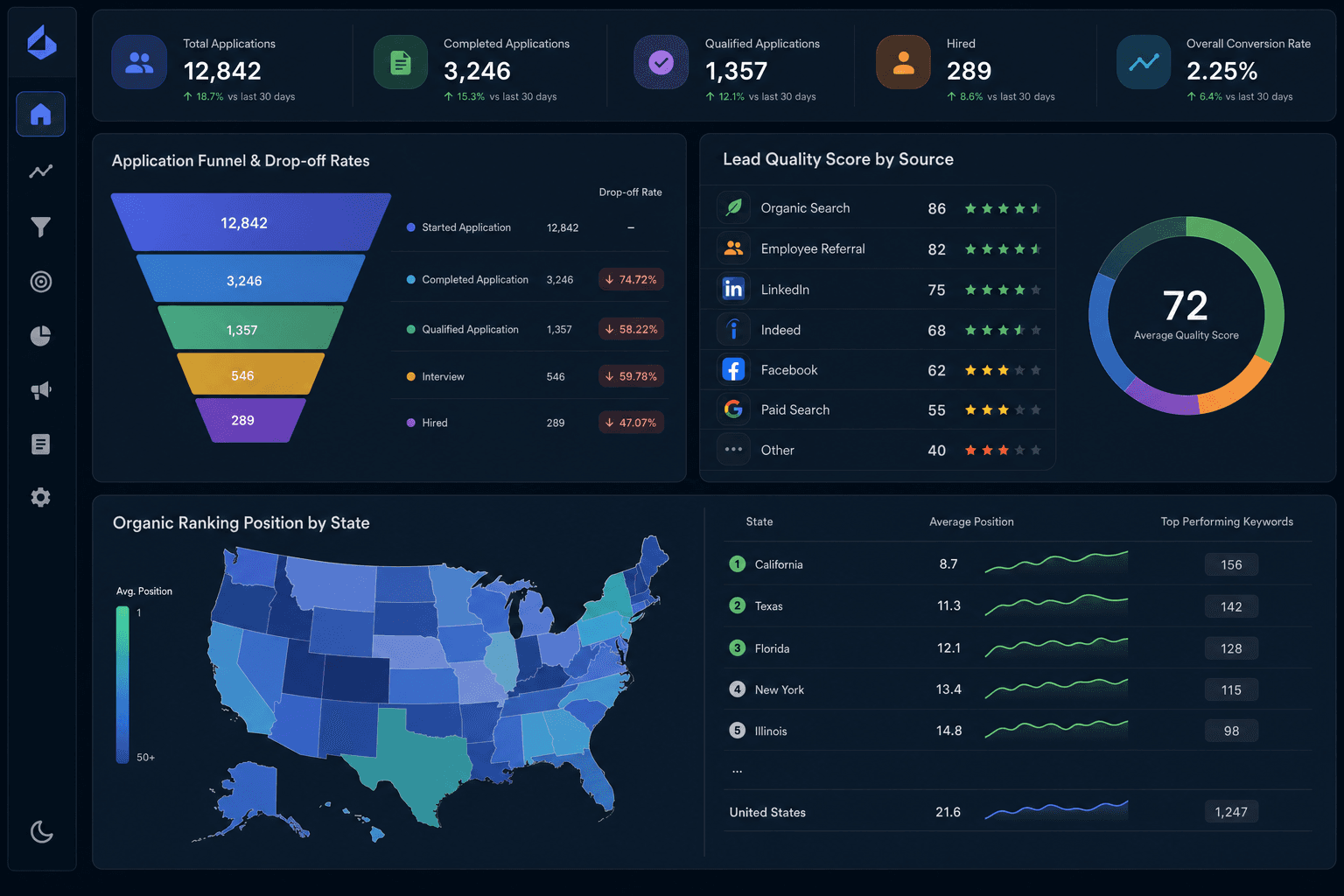
Ready to see what this looks like for your payday lenders business?
No obligation. A senior strategist will show you exactly where the wins are.
The Strategy
The Marketing Strategy Built for a Licensed Short-Term Lender
Because paid search and paid social are off the table for core payday products, every acquisition dollar has to work harder through the channels that remain. The strategy is built around four pillars: organic search by state, compliant affiliate management, owned-channel retention, and conversion optimization of the application itself.
Organic search by state is the foundation. Each state where you hold a license gets its own landing page, built with the state license number displayed prominently, a state-specific APR example using a real loan amount and term, a fee table in plain language, and content that answers the questions a first-time borrower in that state is actually searching. These pages target queries like 'payday loan [city] [state]', 'installment loan [state]', and 'short-term loan near me' with the specificity that earns both organic rankings and borrower trust. For storefront locations, Google Business Profile optimization runs in parallel, because the local pack is where 'payday loan near me' searches convert.
Affiliate and lead partner management is the primary paid acquisition channel, but it requires active management, not passive buying. That means negotiating ping-tree position with aggregators, setting bid prices by source based on historical funded-loan and FPD data, running real-time fraud scoring on inbound leads, and cutting sources that consistently produce high first-payment default rates regardless of their CPL. The governing metric at every review is default-adjusted cost per funded loan, not raw CPL.
Owned-channel retention runs on the existing customer list. Every borrower who opted in at origination is a candidate for CAN-SPAM-compliant email and TCPA-compliant SMS sequences timed to end-of-month cycles, post-repayment windows where state cooling-off rules allow, and the seasonal peak in the second half of the year. The message is simple and compliant: you can apply for another loan when you need it, here are the terms, here is how to apply. No hype, no guaranteed approval language, and no contact outside the federal 8am to 9pm window or a stricter state window, like Florida's 8pm cutoff.
Conversion optimization of the application flow runs continuously. Every step where applicants drop off is a funded loan that did not happen. The application must work in under five minutes on a mobile device, with document requests kept to what state law and your underwriting require, a clear progress indicator, and a funding timeline stated plainly. State-specific disclosures appear where required, not buried in fine print.
The one number that governs this
Every channel is measured against one number: cost per funded loan, adjusted for first-payment default rate by source. A lead that costs $40 but defaults 25 percent of the time costs more than a lead that costs $70 and defaults 5 percent of the time. That math governs every budget decision.
How We Help
How Sagum Executes This for Your Lending Business
We map our work directly to the strategy above. We do not run a generic agency playbook on your account. Here is specifically what we would build for a licensed short-term lender.
State-Specific SEO and Landing Page Development
We build and maintain a state-specific page for each licensed state, with accurate license numbers, compliant APR examples, fee tables, and content targeting the high-intent queries your borrowers are actually searching. Pages are updated when state regulations change and monitored for ranking position continuously.
Google Business Profile Optimization (Storefront)
For physical locations, we optimize each Google Business Profile for local pack placement on 'payday loan near me' and related queries, including review management, Q&A content, hours accuracy, and photo assets that build in-person trust before the borrower walks in.
Affiliate and Lead Partner Management
We audit your current lead sources against funded-loan and first-payment default data, renegotiate ping-tree position and bid prices by source quality, implement real-time fraud scoring on inbound leads, and cut sources that degrade your default-adjusted CPFL. We manage the program actively, not on a monthly reporting cycle.
Email and SMS Retention Automation (CAN-SPAM and TCPA Compliant)
We build segmented sequences for your existing customer list, timed to end-of-month cycles, post-repayment windows, and seasonal demand peaks, with documented opt-in verification, state cooling-off and time-of-day compliance, and clear unsubscribe mechanics built in from the start.
Application Flow Conversion Optimization
We analyze your online application step by step, identify the drop-off points costing you completions, and test form length, field order, progress indicators, and mobile layout to recover funded loans from traffic you are already paying for.
Analytics and Attribution
We build tracking that connects every funded loan back to its source, whether organic, affiliate, or owned channel, so your cost per funded loan and default-adjusted CPFL are real numbers you can act on, not estimates.
Who's Behind This
Who we are, and what makes us different
Sagum is a performance marketing agency founded in January 2017 in St. George, Utah. We've spent 8+ years growing real brands and being judged on KPIs, not vanity metrics.
We deliberately limit how many clients we take so each one gets senior attention. We treat your numbers like our own, we never run generic playbooks, and your strategy is built for your business, because shouldn't your brand's marketing be custom to your brand?
Sagum.ai is our AI arm: the same proven operators now build AI into the work wherever it creates real edge, not as theater, but as leverage applied with discipline.
- 8+ years growing brands on performance KPIs, not vanity metrics
- Limited client roster, with senior attention on every account
- An extension of your team; your success is tied to ours
- Custom strategy per brand, never a generic playbook
- AI built in where it moves a number; judgment over hype
“Sagum is a performance marketing agency that's spent 8+ years growing brands by treating their numbers like our own. We take on few clients, never run generic playbooks, and now build AI into the work wherever it creates real edge, not hype. Your strategy is built for your business, and our success is tied to yours.”

“After six years, Sagum is our most important partner: trusted, communicative, and caring about our business as if it's their own.”
Proof
From a $20 CPL goal to $13 CPL and 300+ leads/mo
Rizzoli's Automotive
Challenge
Rizzoli's Automotive needed to acquire qualified service customers at a sustainable cost per lead, with a goal of 100 qualified leads per month at around $20 CPL.
What we did
Sagum built a custom call-driving landing page and rebuilt the campaign structure around high-intent service queries.
Result
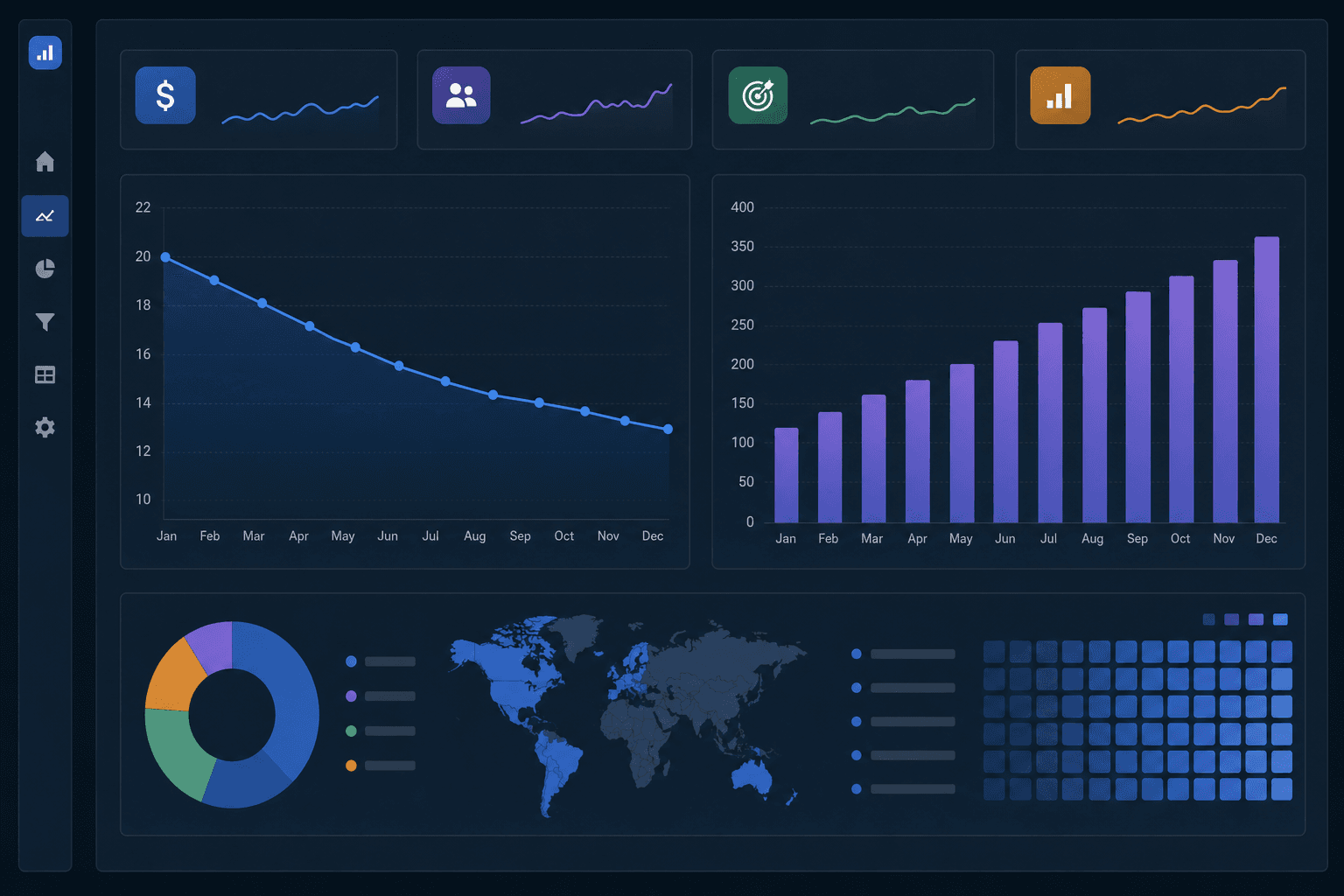
Cost per lead dropped to $13 against the $20 target, volume grew to more than 300 leads per month, and landing page conversion exceeded 60 percent. The client expanded to multiple new locations on the strength of the acquisition economics.
- Cost per lead
- $13
- Leads / month
- 300+
- Landing-page conversion
- 60%+
Find Out Where Your Cost Per Funded Loan Has Room to Move
No obligation. We will review your current acquisition channels, affiliate program structure, and application flow and tell you specifically where the cost per funded loan is higher than it should be and what we would do about it.
Sagum · January 2017 · St. George, Utah · 8+ years