

8+ years growing brands on KPIs, now with AI
More Recurring Pest Customers, Fewer Wasted Calls
We build performance marketing systems for pest control companies that turn inbound calls into signed recurring plans.
Google Ads · Meta · TikTok Partner | 8+ Years | Performance-Only



Get your free marketing audit
Senior strategist review · response within one business day
Prefer to reach out directly?
The Challenge
Pest Control Marketing Runs on Sightings, Seasons, and Plan Conversion
Most calls start when someone spots what they didn't want to see: a termite swarmer on the windowsill, roaches under the sink, mouse droppings in the pantry. They call within hours, and whoever answers first usually books the job.
That call is often worth $150 to $250 as a one-time spray, or $1,620 over three years on a quarterly plan, and your economics hinge on which happens.
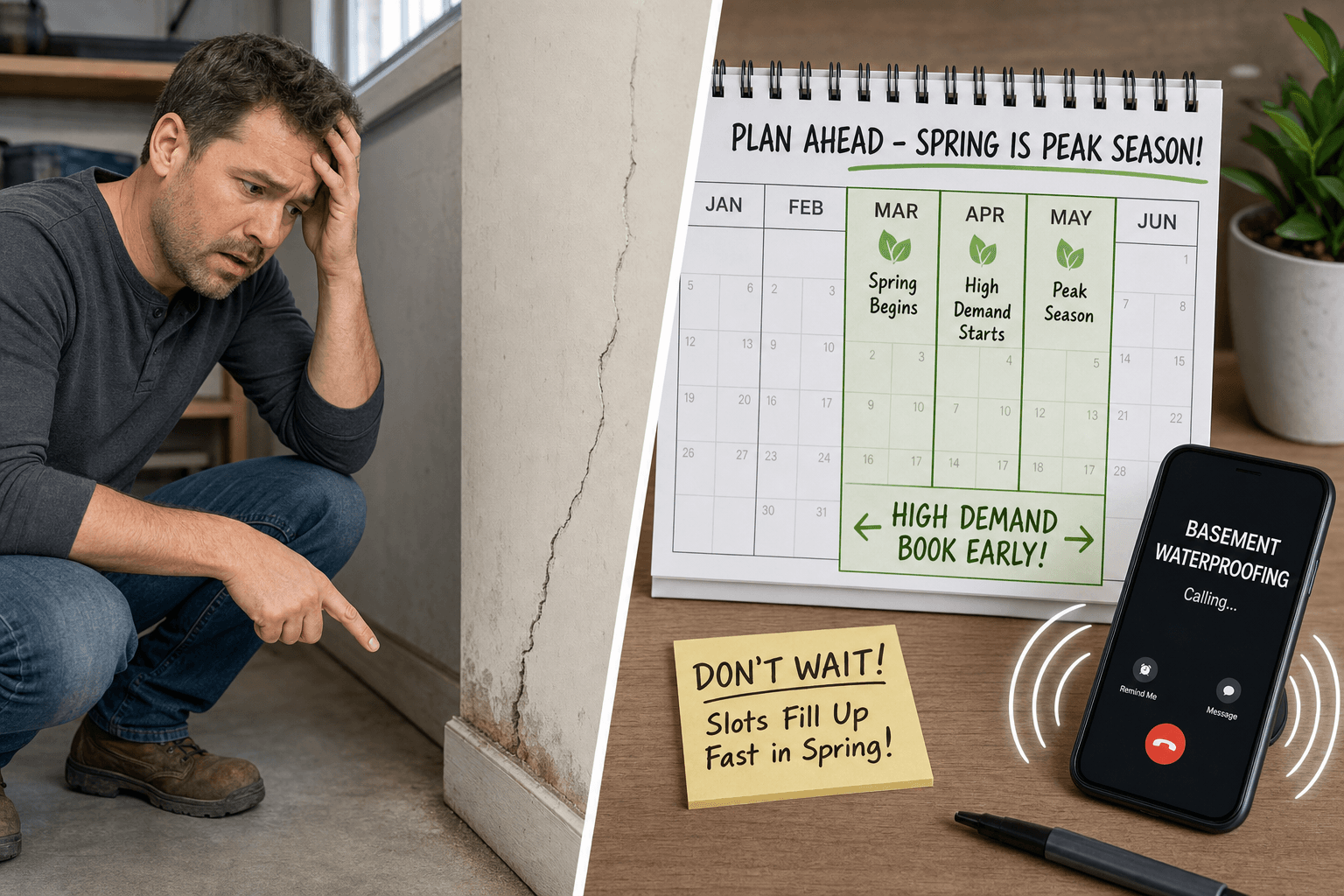
Demand is seasonal: March through September accounts for 60 to 70 percent of annual revenue in most markets. The termite swarm window, a few spring weeks, produces some of your highest-ticket, most urgent jobs. Mosquito season keeps its own schedule, fall brings rodent exclusion, and winter goes quiet. A flat budget overspends in slow months and runs short at peak.
Orkin, Terminix, Aptive, and PE-backed rollups run sophisticated digital operations in your market, and their LTV models justify a $200 cost-per-lead. A local operator with a set-and-forget Google campaign, no call tracking, and no plan-conversion strategy brings a butter knife to that fight.
The Opportunity
The Real Money in Pest Control Is the Recurring Plan
Recurring-plan customers are financial assets: PE rollups pay 7 to 10 times EBITDA for pest control companies built on them. Well-managed books retain 90 percent or better yearly; top operations keep customers seven to ten years.
A $200 initial-service customer on a $135-per-visit quarterly plan is worth $1,620 over three years; across markets and frequencies, three-year value runs $540 to $2,340. Termite monitoring adds $200 to $400 yearly.
Leading operators know first-year value by pest type and plan tier, and which zip codes densify routes or waste drive time.
Local Services Ads (LSA) with the Google Verified badge convert at 20 to 25 percent, above standard Search, yet most operators skip or mismanage them. Add pest-specific pages, plan-conversion follow-up, and automated review requests, and the system compounds; build it before spring and rollups will bid for you in five years.
What Most Get Wrong
What Most Pest Control Companies and Their Agencies Get Wrong
Running one campaign, page, and budget for every pest
Searches for 'termite swarmers in my house' and 'quarterly pest plan' differ in urgency, ticket, and timeline; one page converts both poorly, costing you termite inspections worth five general calls.
Flat monthly ad budgets that ignore the pest calendar
Spending the same in January as in April underfunds termite swarm season and mosquito season, when high-intent, high-ticket buyers search, and wastes money in winter, when residential urgency is lowest.
No call tracking to show which ads book jobs
Most revenue starts with a phone call, not a form fill, so without call tracking you may cut campaigns that bring recurring customers and scale ones that bring one-time callers.
Ignoring plan conversion after the first service
Without automated follow-up, you give up most of your LTV: a one-time spray and a quarterly customer worth $1,620 over three years cost the same to acquire.
Using lead aggregators as a primary channel
Angi, HomeAdvisor, and Thumbtack sell each lead to three to five pest control companies at once, so you enter a speed-and-price race and train your market to shop on price.
Why Now
Why Pest Control Operators Who Build Before Spring Win
Rollins, Rentokil/Terminix, and a dozen regional platforms are buying local operators in every major metro and upgrading those shops' digital infrastructure. Their lead over local independents grows every quarter, but the window to compete hasn't closed yet.
The tools local operators can buy have caught up with what rollups use. AI-assisted ad management can shift budget around the clock toward pest types, zip codes, and time windows that convert, without a full-time analyst. AI-assisted creative testing lets you run six termite inspection angles a week instead of one.
Pest-by-city pages used to take weeks of agency time; with AI-assisted tools, they're faster to build and keep improving on conversion data. Get your system running before spring's termite swarms and first mosquito spray calls, or national and rollup brands take them.
The Mechanism
Where AI Gives Pest Control Marketing a Real Edge
Real productivity, not AI theater. Here's where it actually moves a number for pest control companies.
Digital Ads (Google Search + Local Services Ads)
What AI does: AI-assisted bid management monitors keyword, pest type, zip code, and time-of-day performance and shifts budget toward booked recurring customers, not clicks or calls alone.
The result: Budget follows real demand instead of a static monthly plan, so peak pest seasons stay funded and winter waste drops.
Why it matters here: LSA leads ($15 to $40) and Search leads ($98) differ in intent and conversion, so AI helps split budget by what books jobs locally.
Creative Testing
What AI does: AI generates and tests multiple angles weekly instead of one static ad: safety ('pet-safe treatments'), urgency ('same-day service'), social proof ('500+ five-star reviews in [City]'), and pest hooks ('termite swarmers? Don't wait').
The result: You can find the message that drives plan-convertible calls before a competitor running a single creative has any signal.
Why it matters here: Chemical safety for kids and pets is pest control buyers' #1 objection, so creative that answers it before the click brings warmer, higher-intent calls.
Conversion Optimization (Landing Pages + Call Handling)
What AI does: AI reviews each landing page, one per pest per city, for conversion leaks: unclear CTAs, missing trust signals (license numbers, guarantee terms, technician screening), slow load times, and mobile form friction.
The result: A termite inspection page for your city converts at 25 to 35 percent versus 10 to 15 percent for a generic pest control page.
Why it matters here: In documented pest control tests, changing 'Schedule an estimate' to 'Schedule an inspection today' lifted conversion 119 percent. AI-assisted conversion testing runs such tests continuously.
Analytics and Attribution
What AI does: Call tracking at the campaign, keyword, and landing-page level follows each call through answer, booking, and recurring-plan conversion.
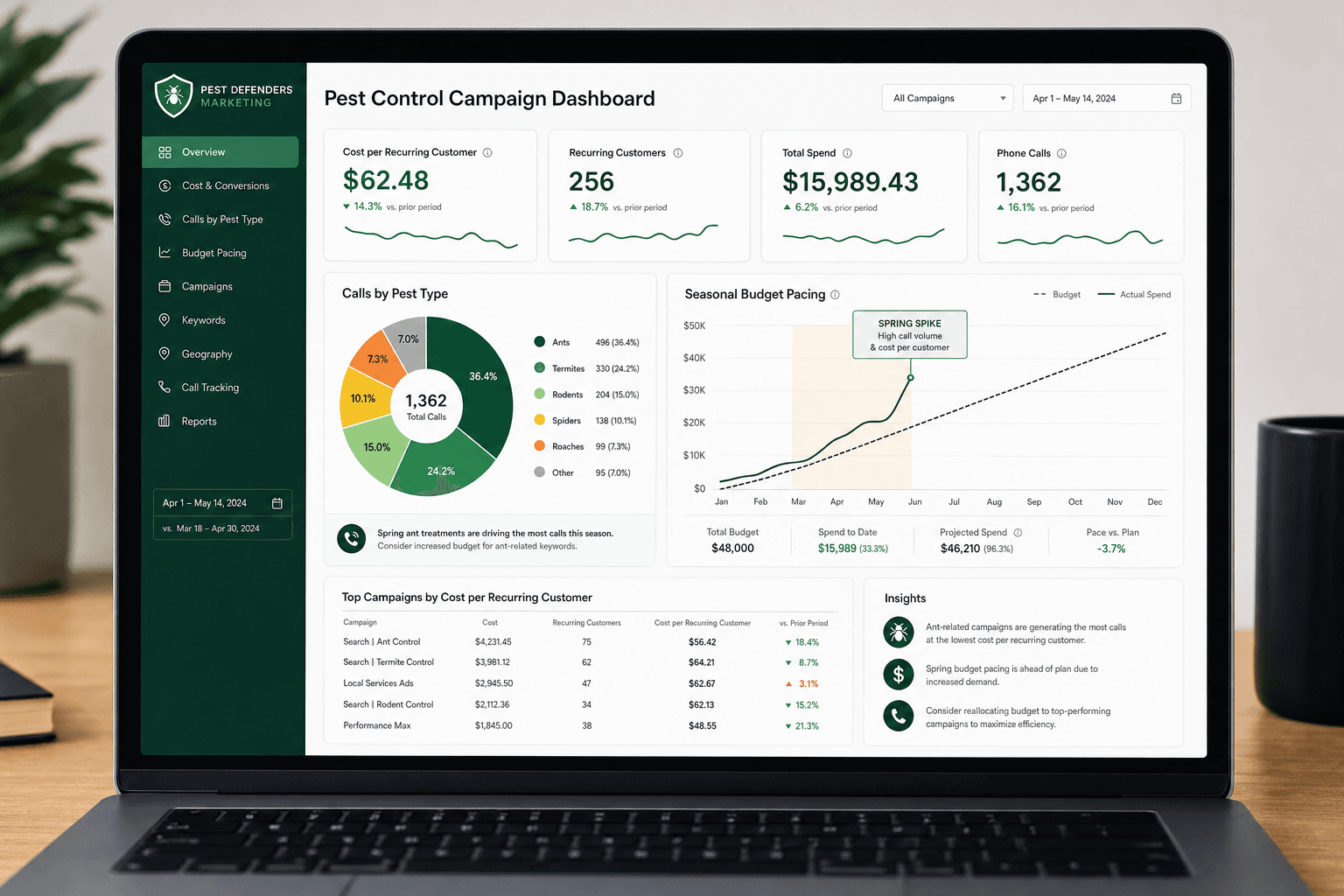
The result: You see cost per new recurring customer by campaign, keyword, and page, the number that determines profitability.
Why it matters here: Most operators optimize on call volume; knowing that number by pest type and channel, plus your LTV math, lets you outbid them on LSA profitably.
Ready to see what this looks like for your pest control companies business?
No obligation. A senior strategist will show you exactly where the wins are.
The Strategy
How a Pest Control Marketing Strategy Should Work
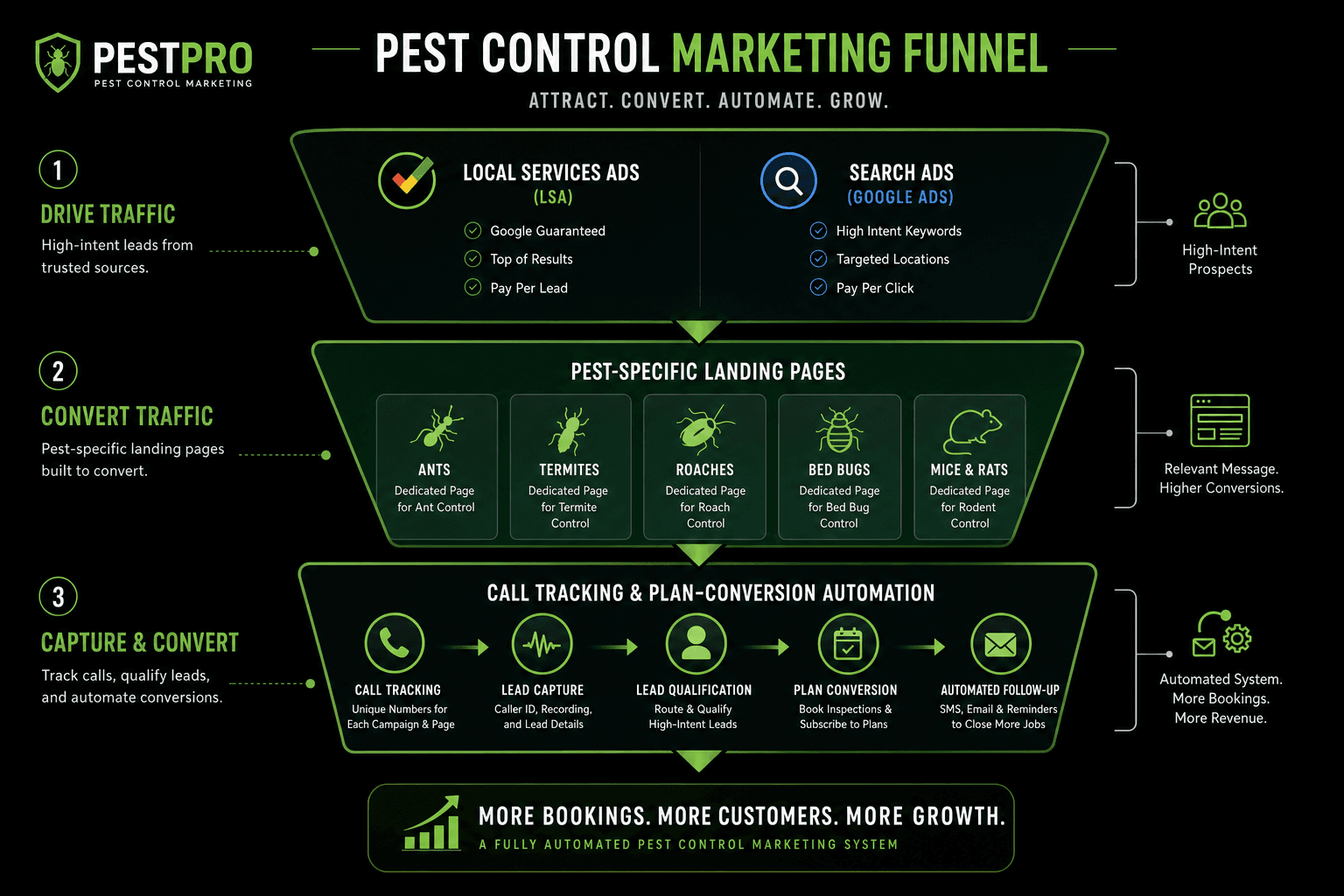
Track every phone number on your ads, landing pages, and Google Business Profile first to see which calls get answered within two rings (LSA ranks you on response time), which book, and which turn into recurring plans.
LSA goes first because the Google Verified badge removes the trust barrier, and pay-per-lead pricing at $15 to $40 per qualified lead makes it the most efficient channel. Standard Search runs alongside, with one campaign and landing page per pest type.
Pace spend to the pest calendar: raise it into March for termite swarms in the South and Southeast, fund mosquito season April through September and rodent exclusion in fall. In winter, shift budget to plan retention: text and email winterization-inspection offers and lock in spring service before competitors call.
Route density is a margin play: each new customer on an existing route lowers per-stop cost across it. Direct-mail door hangers on the ten houses around each new customer are among the most cost-effective densification tools and run on autopilot.
A post-service sequence builds LTV: a text within 24 hours, a day-three email explaining the treatment, and a day-seven plan offer with price and guarantee. It costs almost nothing, can turn a one-time job into a three-year customer, and most operators lack it.
The one number that governs this
Your governing KPI is cost per new recurring customer, not cost per click or cost per call, and every campaign decision is measured against it.
How We Help
What We'd Build for Your Pest Control Business
We start by learning your service area, pest mix, plan-conversion rate, and where tracking breaks, then build in the order that pays back fastest, attribution first.
Call Tracking and Attribution Setup
Before touching your ads, we put tracked numbers on every channel and tie call outcomes to campaigns, making cost per new recurring customer measurable.
Google Local Services Ads Management
We keep your Google Verified badge active and manage the two levers that set LSA cost and call volume: response-time score and review velocity.
Paid Search (Google Ads), Pest-Segmented Campaigns
We build termite, bed bug, mosquito, rodent, and general pest campaigns, each with its own budget, keywords, and landing page, so specialty intent stays undiluted.
Pest-Specific Local Landing Pages
We build and optimize one page per pest per city, with license numbers, guarantee terms, pet-safe treatment explanations, and CTAs matched to each pest's urgency.
Seasonal Budget Pacing
We tie budget to your local pest calendar, from termite swarm season to winter retention, so you're never underfunded at peak.
Post-Service Plan Conversion Automation (Email and SMS)
We automate the post-service text, email, and day-seven plan offer, turning one-time callers into recurring customers without manual follow-up from your office.
Review Generation and Reputation Management
We automate post-job review requests and build a response workflow for your Google Business Profile, because review velocity is a direct LSA ranking factor.
AI-Assisted Creative Testing
We generate and test safety, urgency, and pest-specific ad angles every week and keep the ones that drive plan-convertible calls.
Who's Behind This
Who we are, and what makes us different
Sagum is a performance marketing agency founded in January 2017 in St. George, Utah. We've spent 8+ years growing real brands and being judged on KPIs, not vanity metrics.
We deliberately limit how many clients we take so each one gets senior attention. We treat your numbers like our own, we never run generic playbooks, and your strategy is built for your business, because shouldn't your brand's marketing be custom to your brand?
Sagum.ai is our AI arm: the same proven operators now build AI into the work wherever it creates real edge, not as theater, but as leverage applied with discipline.
- 8+ years growing brands on performance KPIs, not vanity metrics
- Limited client roster, with senior attention on every account
- An extension of your team; your success is tied to ours
- Custom strategy per brand, never a generic playbook
- AI built in where it moves a number; judgment over hype
“Sagum is a performance marketing agency that's spent 8+ years growing brands by treating their numbers like our own. We take on few clients, never run generic playbooks, and now build AI into the work wherever it creates real edge, not hype. Your strategy is built for your business, and our success is tied to yours.”

“After six years, Sagum is our most important partner: trusted, communicative, and caring about our business as if it's their own.”
Long-term partner
6-year client
Proof
From a $20 CPL goal to $13 CPL and 300+ leads/mo
Rizzoli's Automotive
Challenge
Rizzoli's Automotive set a goal of 100 qualified leads per month at roughly $20 per lead.
What we did
We built a custom, call-driving landing page and rebuilt paid search around high-intent service queries.
Result
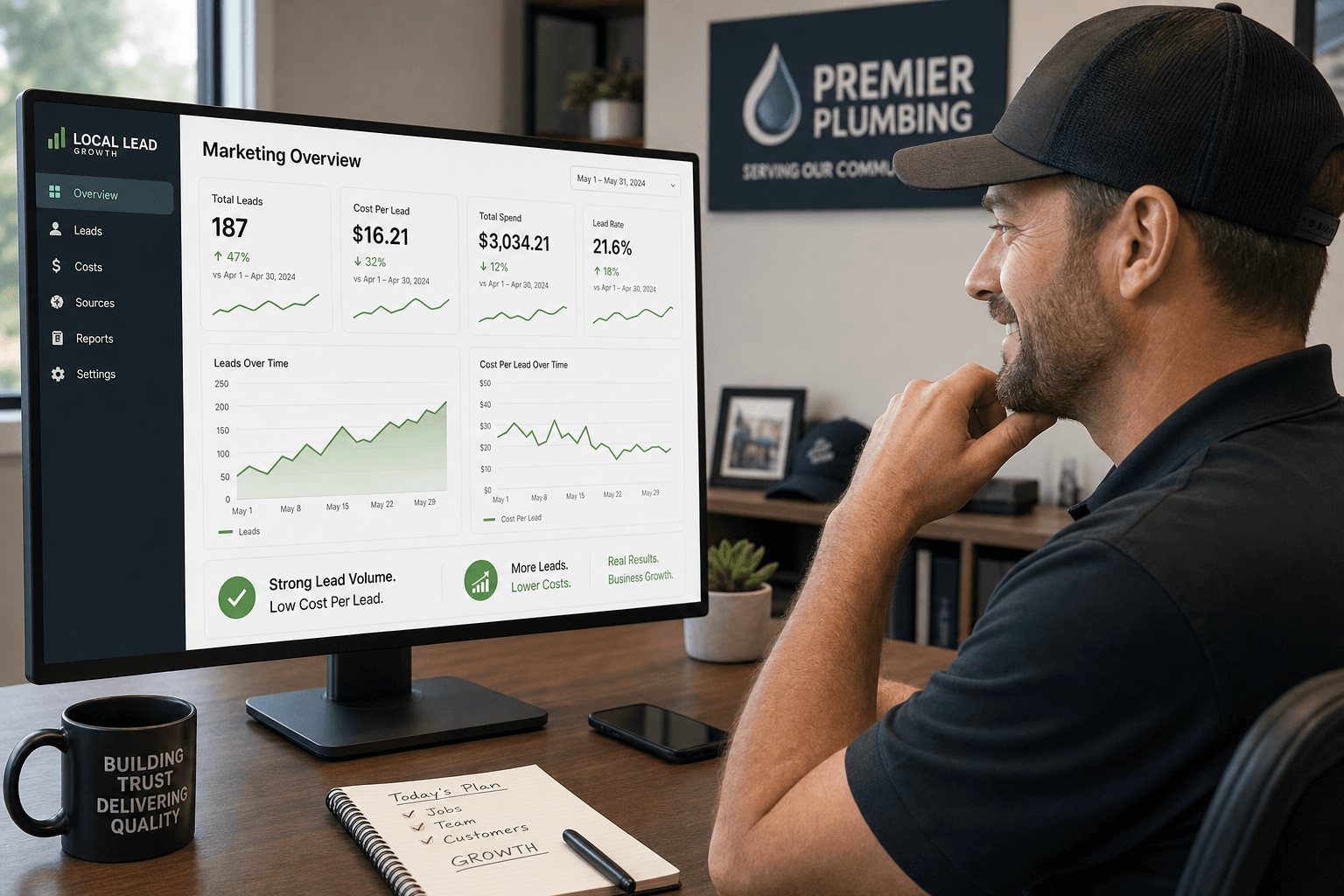
Cost per lead came in at $13, leads reached 300-plus a month, landing-page conversion hit 60 percent or better, and the client opened multiple new locations. We'd bring that method to pest control.
- Cost per lead
- $13
- Leads / month
- 300+
- Landing-page conversion
- 60%+
Find Out Where Your Pest Control Marketing Is Leaking Money
No obligation. We'll review your campaigns, call tracking, and plan-conversion setup and show you where the gaps are, based on your market, pest mix, and recurring-customer economics.
Sagum · January 2017 · St. George, Utah · 8+ years